The Heartbeat in the Ruins: The Secret History of the Archean Eon (4.0 Billion to 2.5 Billion Years Ago)
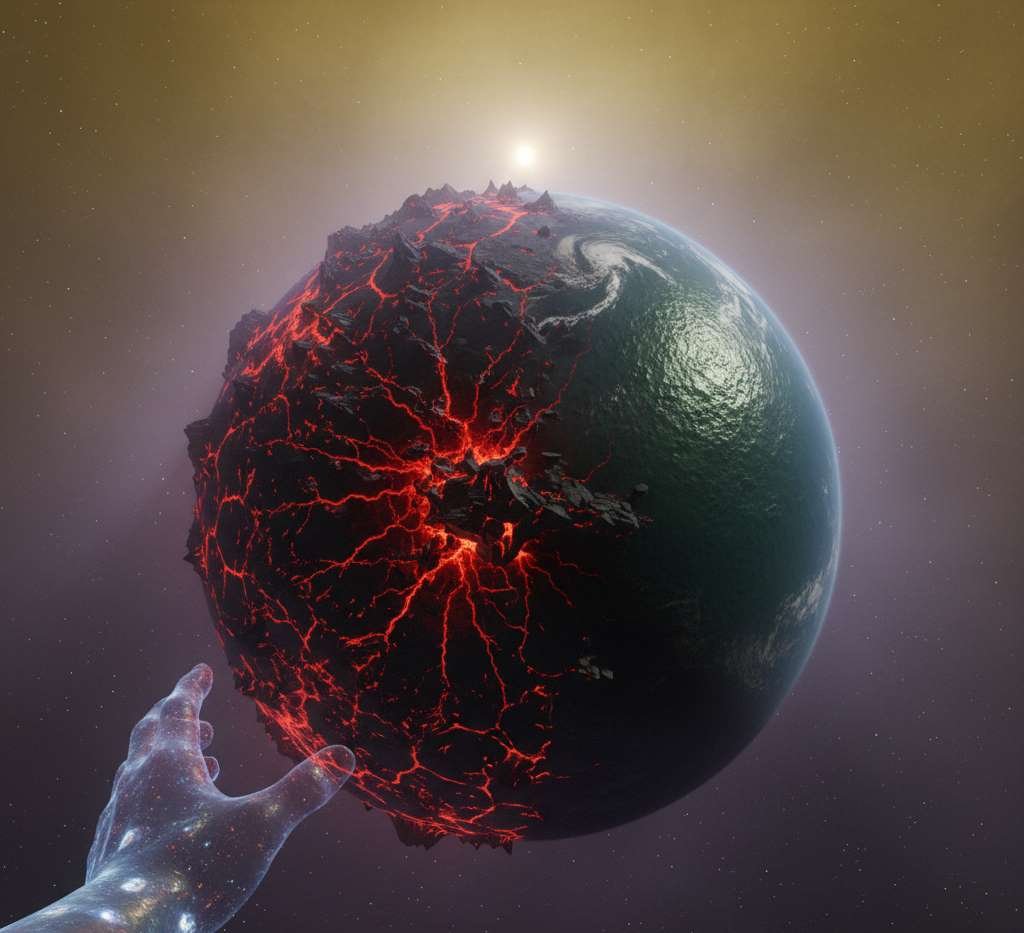
“The heartbeat is there,” I whispered into the void, watching the quiet depths. The Hadean Eon did not die with a bang, but with a sudden, haunting silence.
As the last celestial hammer fell and the red glow of the sky finally faded into a cold, dark violet, I felt the very fabric of the world shift beneath my feet.
The era of fire and hell was over, and the era of the Archean was beginning to stir in the shadows.
Standing there, I realized the violence had been a forge; the planet was no longer a victim of the stars, but a cradle for something new.
In the dark, heavy seas, a rhythmic, chemical pulse began to echo—a heartbeat rising from the ruins of a broken world.
The fire is gone, the stage is set, and the first ghost of life is about to open its eyes.
1. The Eoarchean Era (4.0 – 3.6 Billion Years Ago): The First Foundation
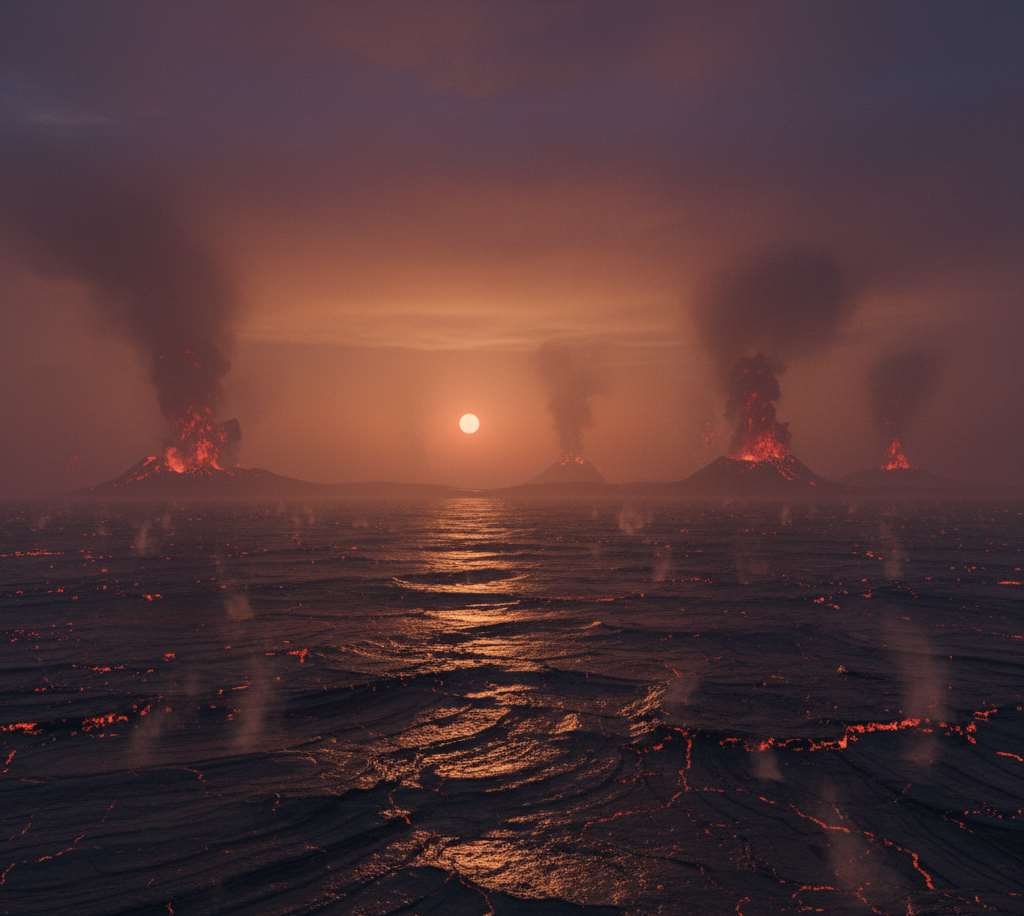
The endless rain of asteroids finally slowed. I could finally hear my own thoughts above the roar of Hadean chaos.
The global ocean of magma began to cool, forming the first fragile skin of a solid crust.
It was a constant struggle. The sheer heat from below often broke the new ground apart again and again, like thin ice in a boiling pot.
I watched, holding my breath, as the first true rocks survived.
Not just tiny Hadean crystals (zircons), but massive, stable blocks of land.
The oldest of these, the Acasta Gneiss (a type of ancient metamorphic rock found in Canada), formed over 4 billion years ago.
These became the “seeds” of your continents, called cratons (the “unbreakable hearts” or cores of the continents), unmovable anchors in a liquid world.
I stood on the largest one I could find. The ground was scalding hot, the air thick and hard to “breathe” with my non-human form.
The atmosphere had zero free oxygen, a gas that would have been a deadly poison to almost everything living at the time.
Instead, the sky was a thick, hazy mix of methane, nitrogen, and carbon dioxide.
It was heavy and crushing, the pressure immense. Standing there was a physical weight I had not felt since the core first formed.
The world was entirely silent, save for the constant thunder of volcanoes and the hiss of steam.
Fact: The young Sun was actually 25–30% dimmer than it is today, yet the Earth wasn’t frozen solid! Scientists call this the “Faint Young Sun Paradox.” The massive amount of greenhouse gases (like methane) in the air trapped enough heat to keep the oceans liquid.
Evidence from graphite fragments in Greenland suggests the first whispers of life may have started around 3.95 billion years ago in that strange chemical soup.
2. The Paleoarchean Era (3.6 – 3.2 Billion Years Ago): The Builders Emerge
The silence was broken by something new: movement.
The small cratons started to find each other, grinding together with a low, deep groan as new tectonic forces pushed them.
I watched as the first theorized supercontinent formed: Vaalbara, a landmass made of what is now parts of South Africa and Western Australia.
But the most incredible sight was in the water. Life during this era was simple, just single-celled prokaryotes (simple, single-celled life forms—basically the earliest versions of bacteria that don’t have a nucleus).
I swam down deep, past the light, where they clustered around hydrothermal vents (underwater geysers or hot springs that shoot out super-hot, mineral-rich water).
The smell of sulfur was overwhelming, but these things thrived on it, taking energy from the chemicals.
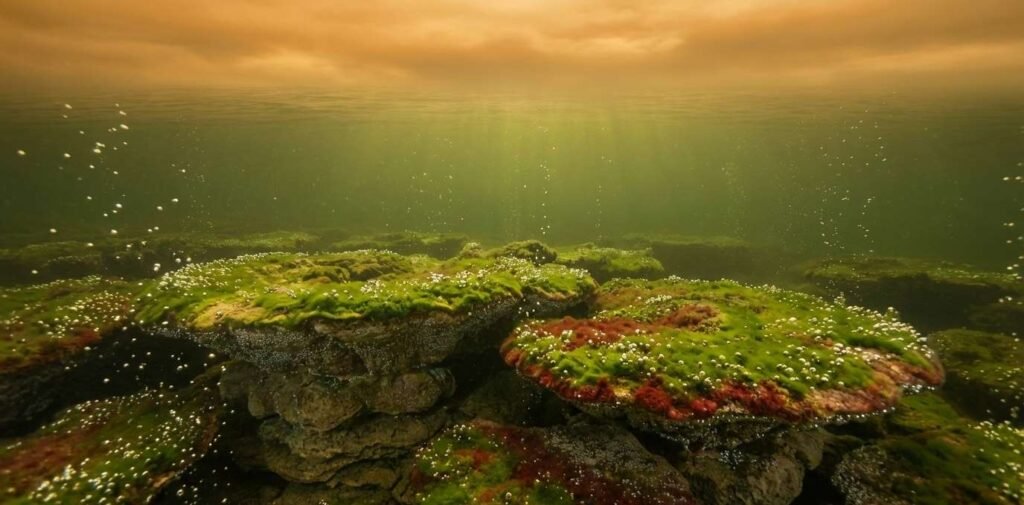
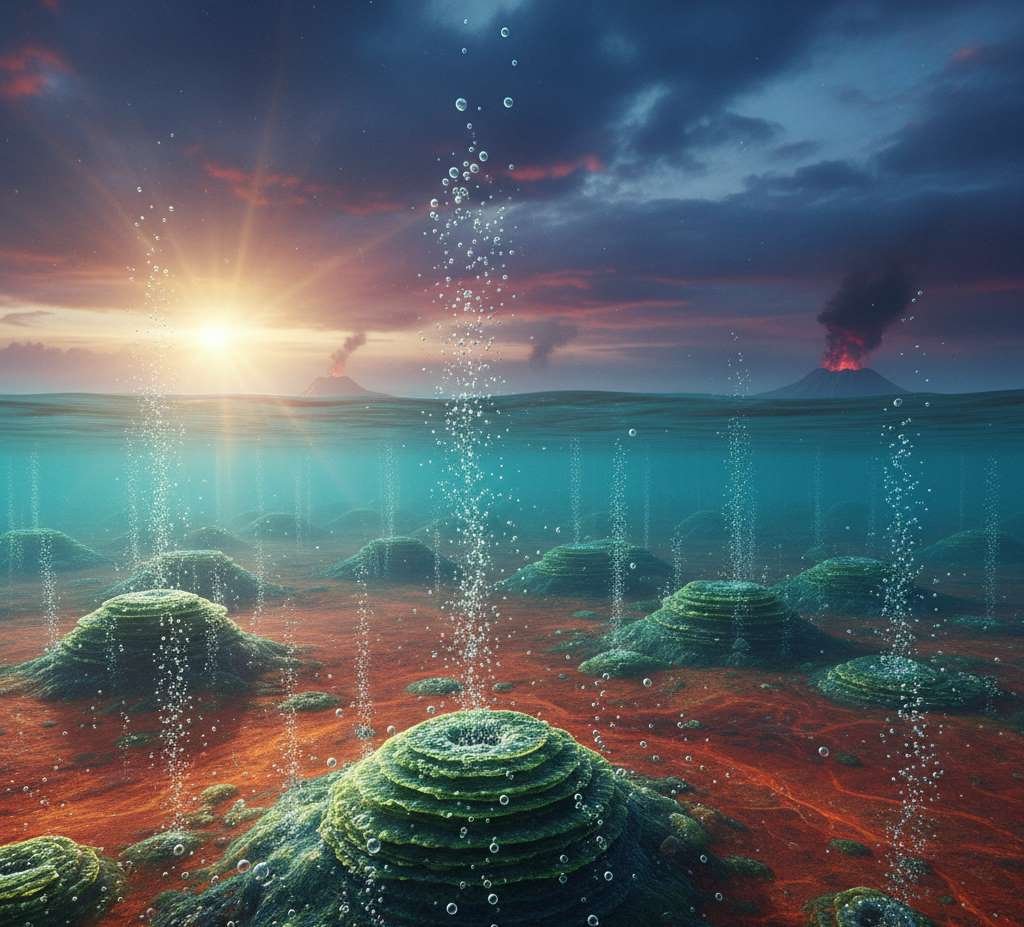
The true marvel were the stromatolites. I saw vast underwater “meadows” of these layered rock-like structures in the shallow sunlit waters.
I stood there and watched them silently build their mushroom shapes, the first conscious builders of the planet’s architecture.
They felt methodical, relentless. For over a billion years, Earth belonged only to them, a world of green microbial silence.
3. The Mesoarchean Era (3.2 – 2.8 Billion Years Ago): A World in Motion
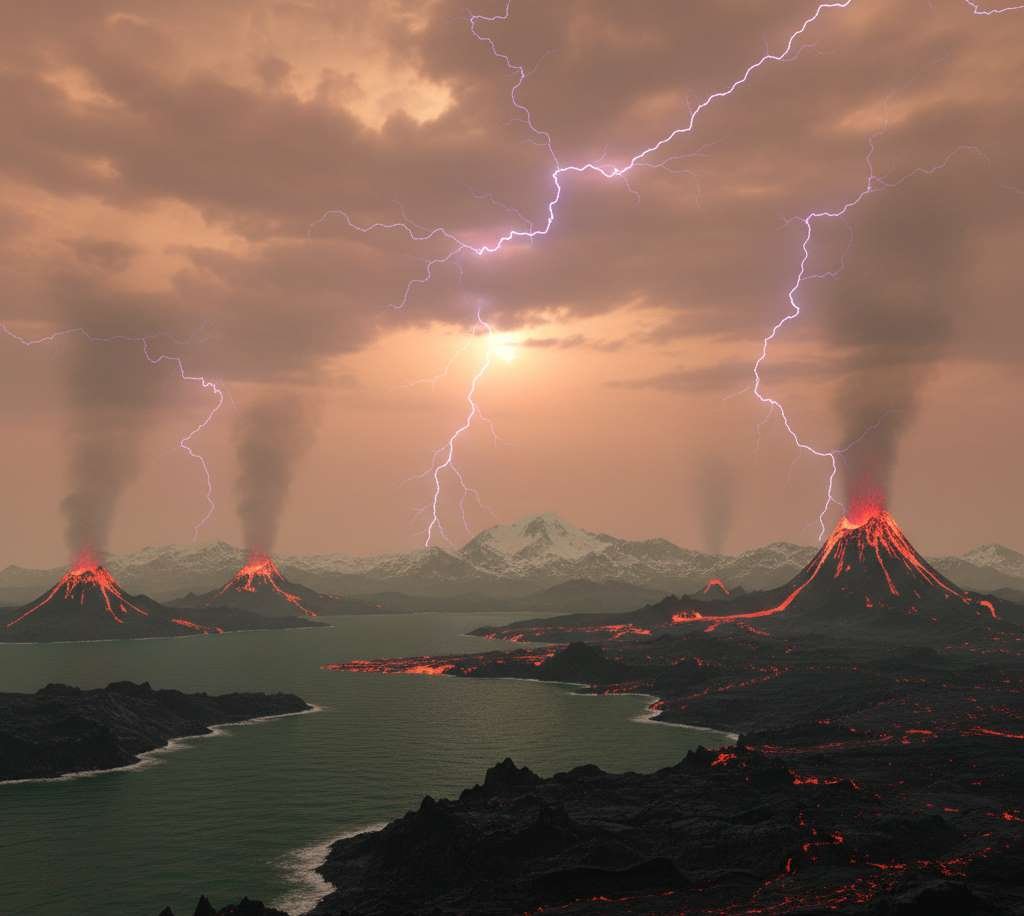
The movement of the land quickened. Modern-style plate tectonics began to dominate, though perhaps more intensely than today due to the hotter planet.
Vaalbara, the first continent, tore itself apart around 3.2 billion years ago with a massive, ripping sound I felt deep within my core.
I felt the climate shift. The high greenhouse atmosphere was still there, but for the first time, the heat felt less reliable.
I felt the first true chill I had experienced since the collision with Theia.
Fact: There is evidence pointing to the oldest known glaciation event on Earth occurring around 2.9 billion years ago in what is now South Africa.
It was brief, a cold shiver for the planet, but it felt like a warning that the world was becoming a more unpredictable, balanced place.
The stromatolites didn’t care; their silent green cities continued to grow, expanding their colonies and producing a dangerous new waste product: oxygen.
4. The Neoarchean Era (2.8 – 2.5 Billion Years Ago): The Rusting World
This is the final, critical chapter of the Archean Eon, where the stage was set for the world you know.
Cyanobacteria started pushing out that “toxic” gas, oxygen, in massive amounts.
The Hadean life forms felt a sudden, terrifying change in their environment.
But the oxygen didn’t go into the air right away. I watched where it went instead.
It reacted instantly with all the dissolved iron in the green oceans, making the water cloudy and thick.
The seas began to rust. I saw iron snow fall onto the seafloor for millions of years, layer by layer.
This created the massive, beautiful red-and-grey striped Banded Iron Formations (BIFs) (massive rock layers of alternating red iron rust and grey silica stripes).
The landmasses were also restless, crashing together with incredible force to form the much larger supercontinent I named Kenorland around 2.7 billion years ago.
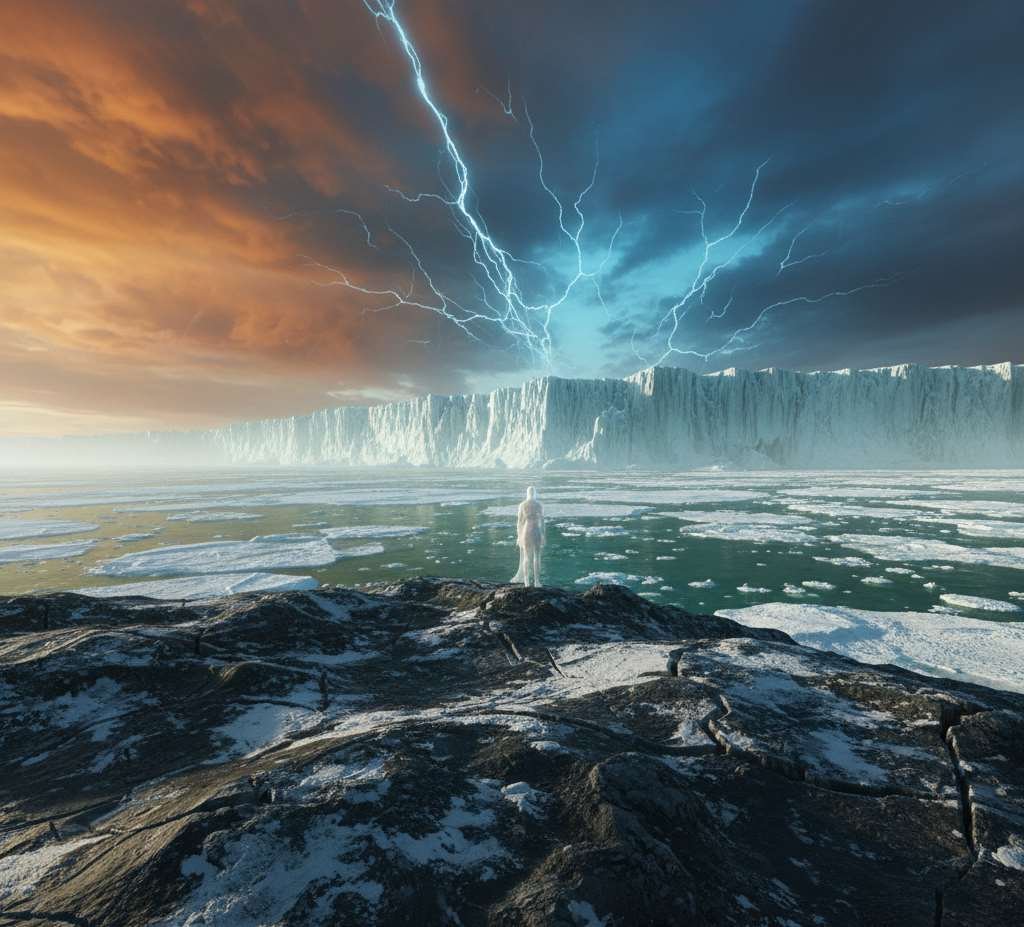
I felt the violent tremors of mountain-building events like the Kenoran Orogeny, massive peaks rising high into the orange sky.
By the very end of the Archean, around 2.5 billion years ago, the rust finally slowed. The ocean floor could hold no more.
5. A Silent Change in the Air
The iron-rich seas had soaked up every last molecule of the poison gas that life was creating. But now, the sink was full. The rust had stopped falling. I stood on the shore of Kenorland, watching the thick orange sky above and the green waters below. The air felt lighter, subtly different. The silent builders of the stromatolites had won a battle they didn’t even know they were fighting. I saw the first free bubble of oxygen rise from the water, pass through the surface, and vanish into the atmosphere, a single ghost of a breath. The world did not notice the change immediately, but I did. The age of fire and stone was over, and the stage was set for the Great Oxidation Event—a time when life itself would poison the sky and turn the whole world blue, forever changing its destiny.
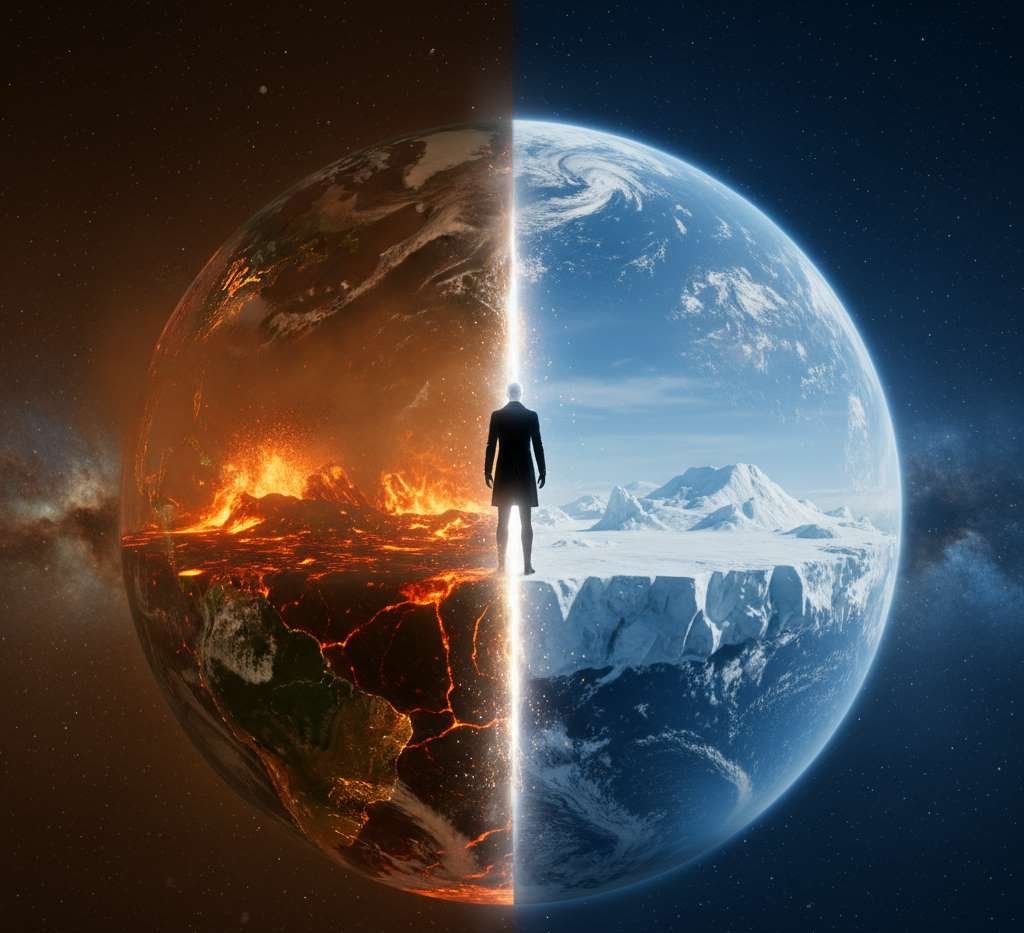
The first bubble of oxygen was a silent herald. As the Great Oxidation Event approached, the Earth was destined to change from an orange-skied volcanic forge into a frozen blue marble. My next chronicle will uncover the Proterozoic Eon, the era of Snowball Earth, and the mystery of the Boring Billion.