The Long, Blue Breath: The Secret History of the Proterozoic Eon
(2.5 Billion to 541 Million Years Ago)
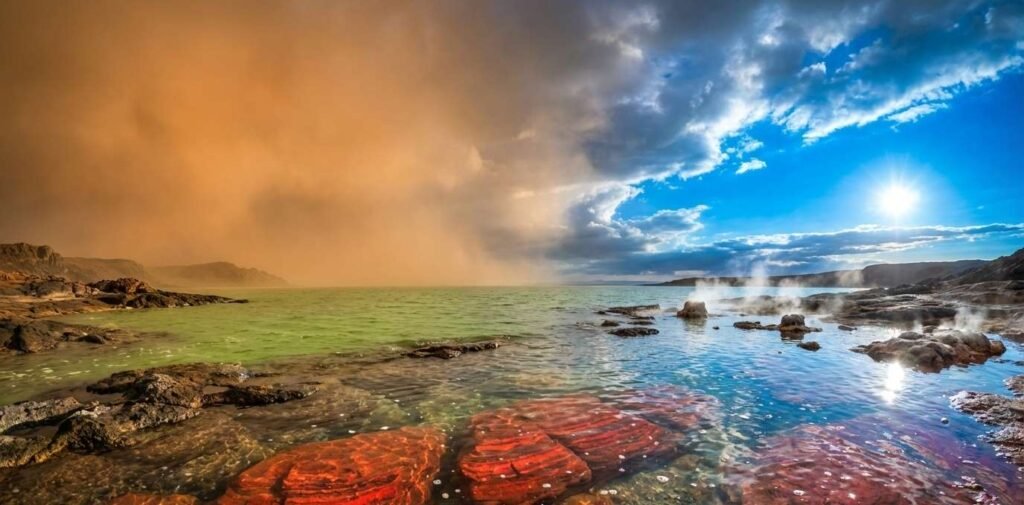
Transition of earth from Archean Eon to Proterozoic Eon
“The iron has finally finished its work,” I whispered. My feet were sunk in red, clay-like mud, but for the first time in billions of years, the water lapping at my toes wasn’t that murky, swampy green I had grown so used to in the Archean.
I spent an eternity watching the ocean act like a giant, hungry sponge. You see, the early oceans were filled with dissolved iron, and every time the tiny bacteria made a puff of oxygen, the iron would “grab” it, turn into rust, and sink to the dark seafloor. But now, the sponge was full.
The iron was gone, locked away in miles of striped red rock, and I watched the first free bubble of oxygen break the surface and stay in the air. This was the start of the Proterozoic Eon—a two-billion-year journey where the planet learned how to breathe, how to survive a deep freeze, and how to build the complex life that eventually became you.
Part 1: The Morning of the Eon (The Paleoproterozoic Era) 2.5 – 1.6 Billion Years Ago
The eon began with a disaster. Those tiny green builders (the cyanobacteria) were still pumping out oxygen. To them, it was just waste. To the rest of the world, it was a revolution.
I watched as the oxygen finally filled the sky. But it did something no one expected: it ate the methane. The methane was the Earth’s warm, cozy blanket. Without it, the heat escaped into space. I felt the first true bite of winter. The planet didn’t just get cold; it turned into a giant snowball. This was the Huronian Glaciation. For 300 million years, the world was a silent, white tomb.
But life is clever. In the deep, dark corners of the ocean, near the warmth of volcanoes, it survived. And it came out stronger. Around 2.1 billion years ago, I saw the first Eukaryotes. Before this, life was just simple bubbles. Now, cells were becoming complex, with “engines” and “brains” inside them. They were getting ready for something big.
The Siderian Period (2.5 – 2.3 Billion years ago): The Sky Turns Blue
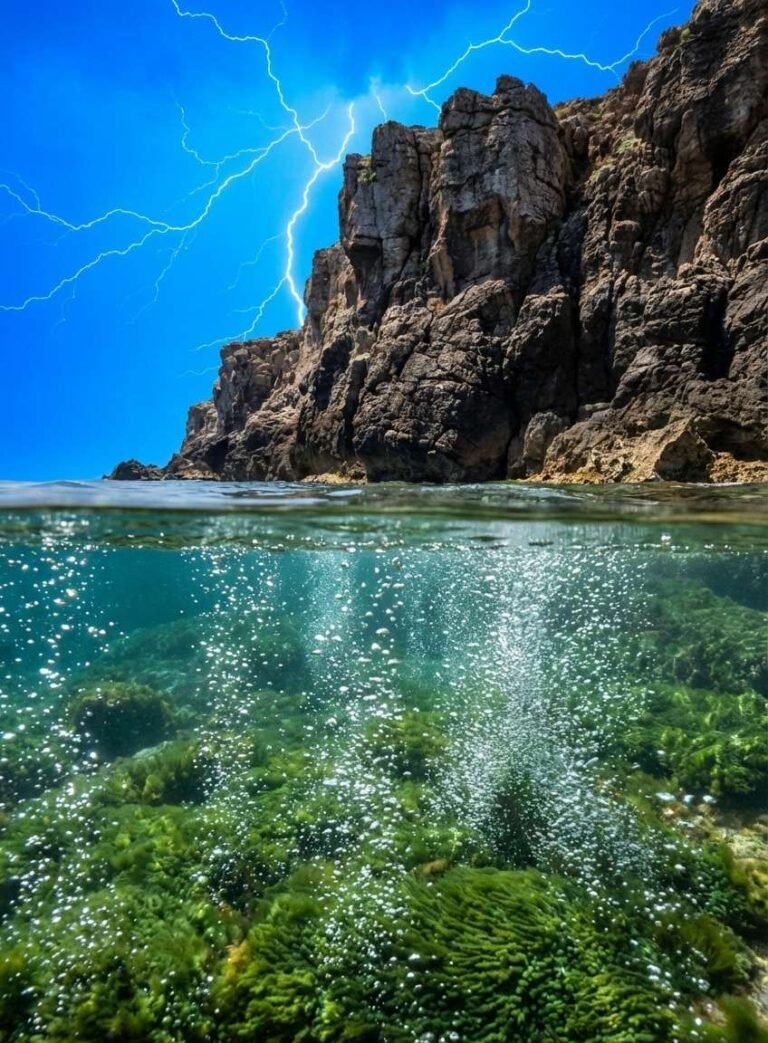
The Oxygen Revolution during Siderian Period
The eon began with a transformation so violent it’s a miracle anything survived. This was the Great Oxygenation Event.
For eons, the sky had been a thick, hazy orange because it was full of methane, but as oxygen flooded the air, it reacted with that methane and cleared the haze.
I stood on a rocky cliff and watched the sky turn a piercing, beautiful blue for the very first time. However, this beautiful blue sky was actually a deadly poison to almost everything alive back then.
Most life was “anaerobic,” meaning oxygen acted like acid to them, and I watched as a massive “silent extinction” wiped out almost everything from the old world because they simply couldn’t handle the new air.
The Rhyacian Period (2.3 – 2.05 Billion year ago): The First Snowball
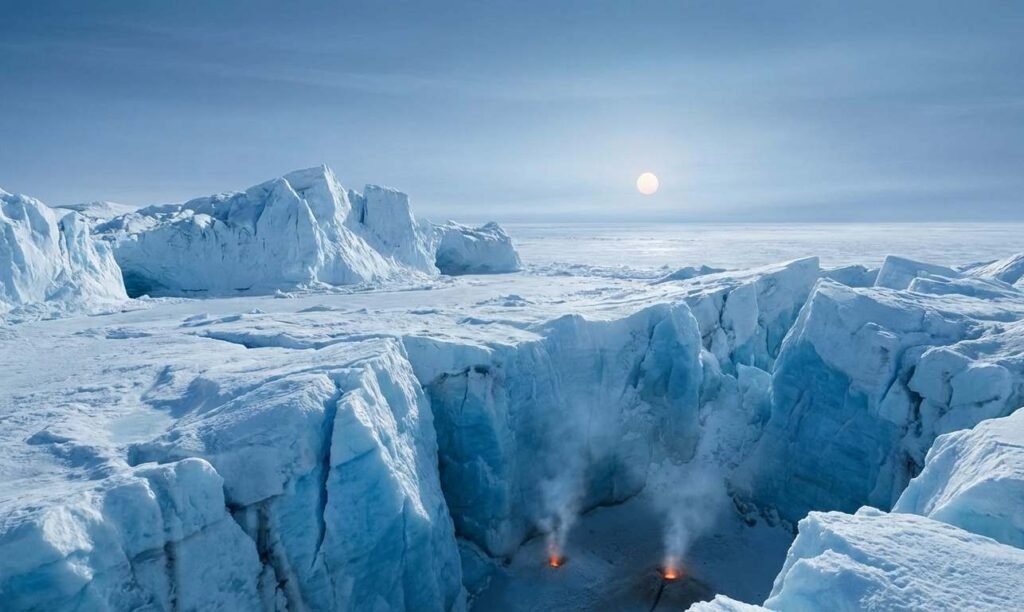
The Snowball earth
As the oxygen cleaned the sky, it accidentally destroyed the Earth’s methane “blanket” that kept the planet warm. Without that gas to trap the sun’s heat, the Earth began to shiver until it fell into the Huronian Glaciation.
I felt a cold more absolute than anything you can imagine as the ice moved all the way to the equator, turning the world into the first “Snowball Earth.”
I walked across oceans covered in ice over a mile thick for nearly 300 million years, watching life huddle in tiny, boiling pockets near underwater volcanoes just to stay alive while the rest of the planet was a silent, white tomb.
The Orosirian Period (2.05 – 1.8 Billion years ago): The Stars Strike Back
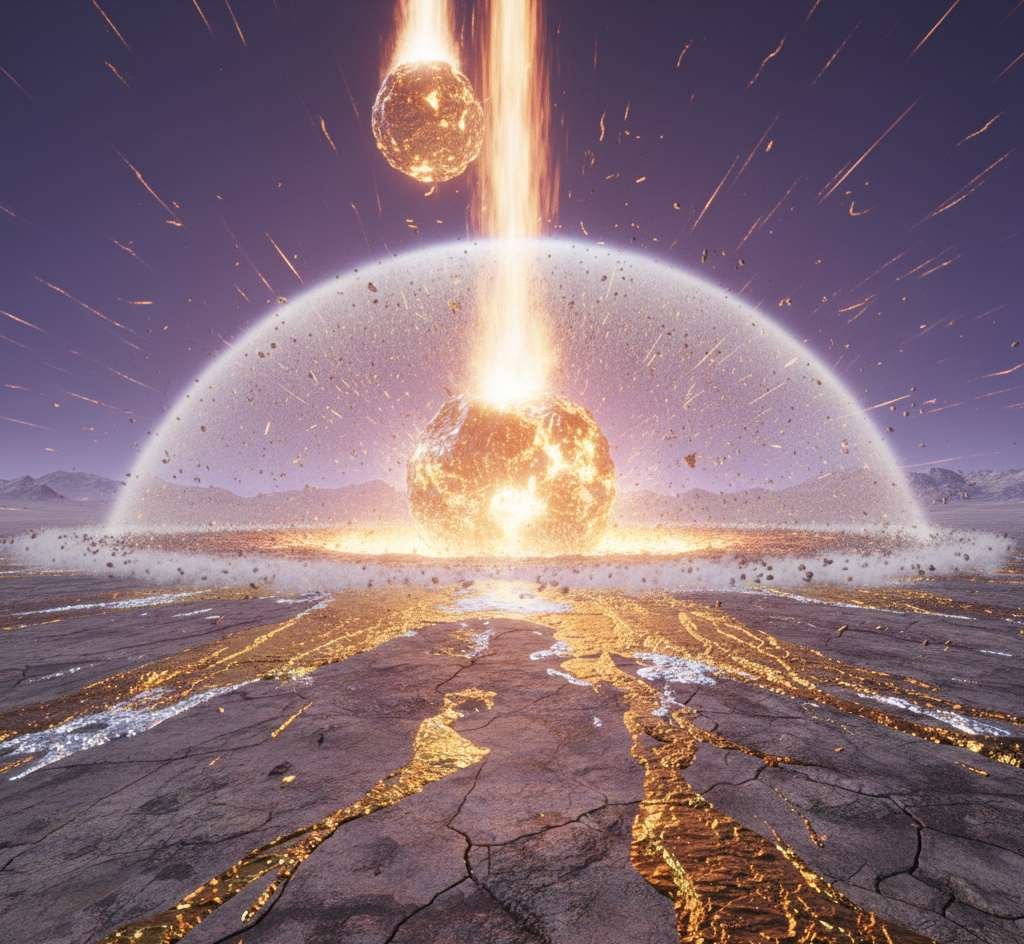
Giant Asteriods hitting the earth surface
Just as the ice finally melted, the universe decided to test the Earth again.
I stood on the crust and felt the shockwaves travel through the very core of the planet as two massive asteroids—mountains falling from the sky—slammed into the world. One created the Vredefort Crater in South Africa, a scar 180 miles wide, and the other formed the Sudbury Basin in Canada.
These impacts were so powerful they actually changed the chemistry of the crust, bringing precious metals like gold and nickel up from the deep to the surface where they would sit for billions of years.
The Statherian Period (1.8 – 1.6 Billion years ago): The Great Merger
By the time I reached the end of this era, life finally found a way to become stronger through a “Great Merger” called Endosymbiosis.
I watched as a larger cell swallowed a smaller one, but instead of eating it, they formed a partnership where the smaller cell became a “powerhouse” called mitochondria. This created the Eukaryote, the complex cell that has a protected nucleus for its DNA
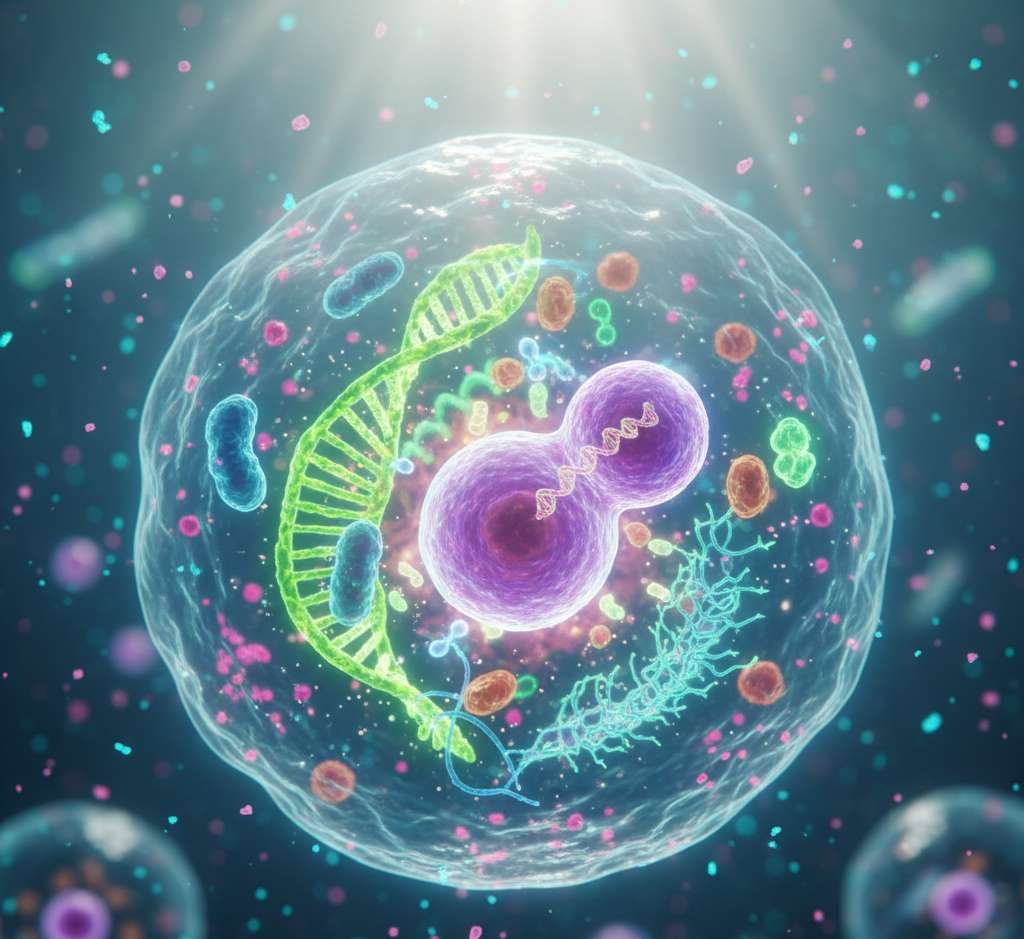
First complex life of earth with DNA
This is the very same cell that eventually built every tree, every bird, and every person you love. Life was no longer just a simple bubble; it was now a team.
Part 2: The Long Sleep (The Mesoproterozoic Era) 1.6 – 1.0 Billion Years Ago
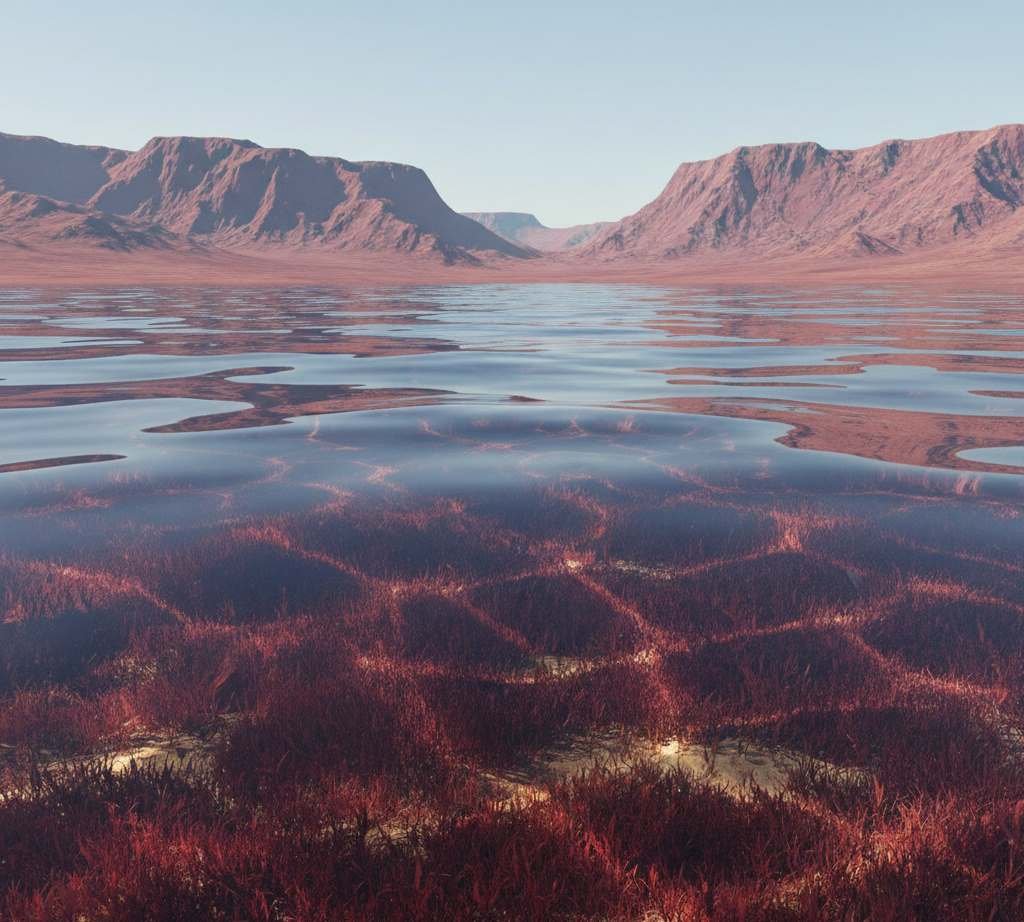
Earth during the Mesoproterozoic Era
After the ice melted, the Earth settled into a long, strange calm. For about a billion years, not much seemed to change on the surface. People call it the “Boring Billion,” but I saw the truth—the Earth was just catching its breath.
The land was moving, though. Huge pieces of the crust were grinding together like slow-motion giants. I watched them form a massive supercontinent called Rodinia. It was a vast, red desert—no plants, no trees, just the sound of the wind.
But in the water, a miracle happened. Around 1.2 billion years ago, life “invented” Sexual Reproduction. Instead of just making copies of themselves, organisms started mixing their blueprints. It was the birth of variety. The “story” of life finally had more than one character.
The Calymmian Period (1.6 – 1.4 Billion years ago): The Stable Lands
After the chaos of the fire and ice, the Earth settled into a time of deep stability often called the “Boring Billion.” The Earth’s crust was finally thickening into stable continents, and I watched as shallow, sunlit waters called “continental shelves” grew near the edges of the land. These areas became the world’s first nurseries, giving the new complex cells plenty of room to grow, soak up the sun, and experiment in the safety of the calm, mineral-rich water.
The Ectasian Period (1.4 – 1.2 Billion years ago): The First Reefs
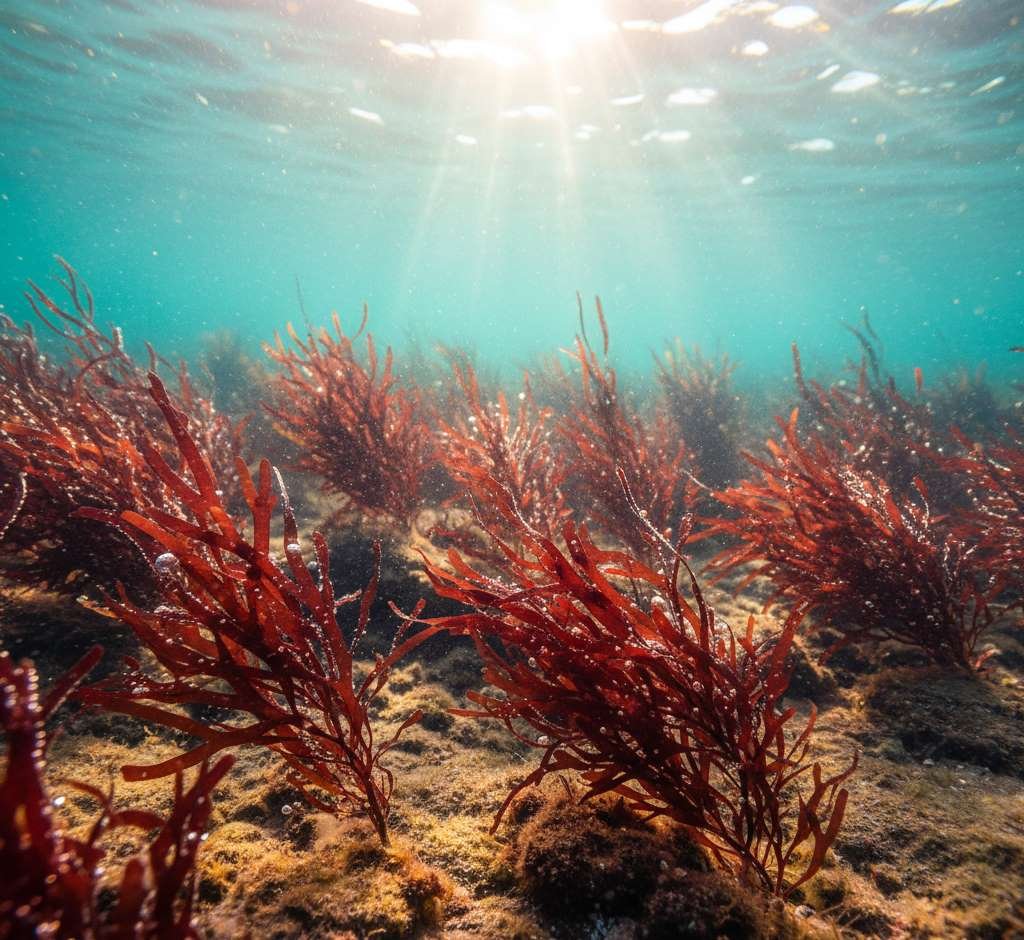
By this time, life began to take on shapes you might actually recognize. In those shallow nurseries, I saw the first large colonies of red algae bonding together into multicellular structures.
They weren’t just single bubbles anymore; they were the world’s first “forests,” even if they were still under the water. They were the ancestors of every green plant on Earth, and by breathing out more oxygen, they ensured the “Blue Poison” was now the “Blue Life-Giver” for the entire planet.
The Stenian Period (1.2 – 1.0 Billion years ago): The Invention of Sex
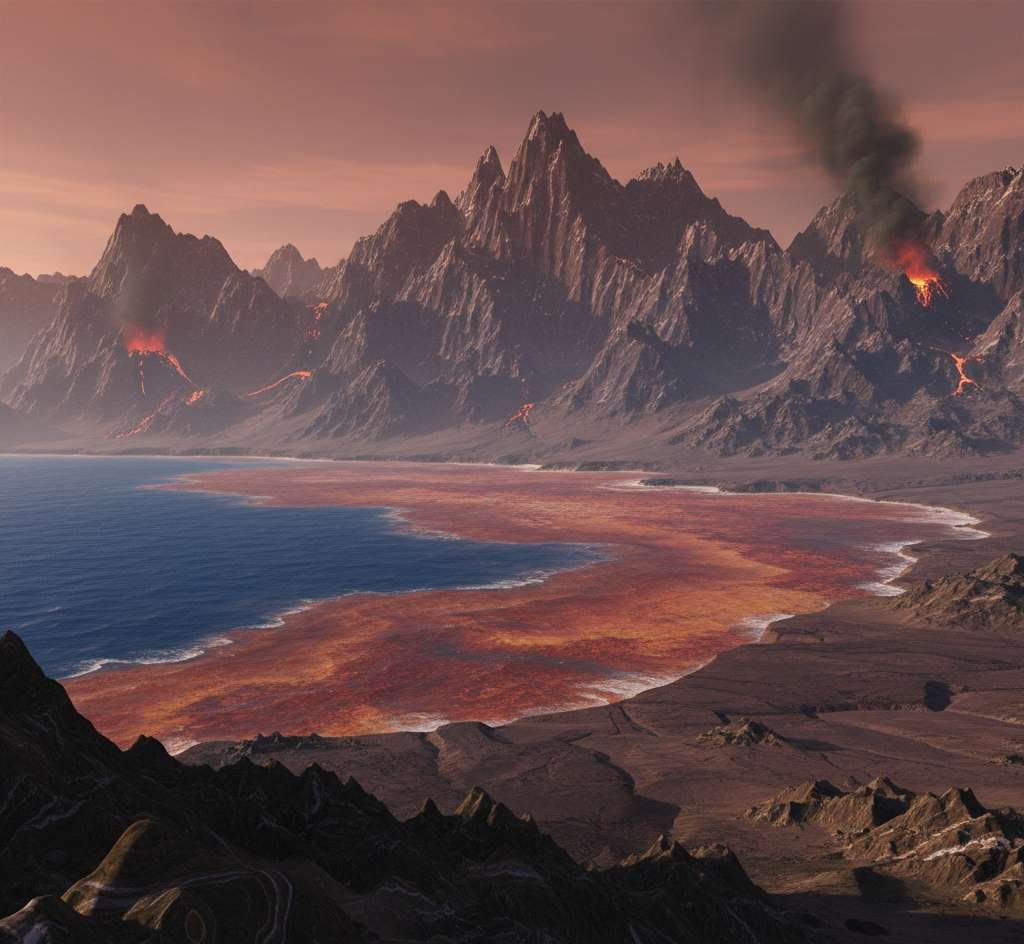
This was a time of massive movement where I felt the continents collide to form a single, giant supercontinent called Rodinia. It was a giant, red desert with no trees, but in the water, life made its most important discovery: Sexual Reproduction.
Life stopped just “cloning” itself, where every child was an exact twin of the parent. By mixing DNA, the speed of evolution accelerated by a thousand times. This spark of variety is why the world today is filled with millions of different species instead of just one.
Part 3: The Great Trial (The Neoproterozoic Era) 1,000 – 541 Million Years Ago
As we moved toward the end of the eon, things got wild again. Rodinia, the great landmass, started to break apart. This messiness messed with the climate.
Once again, the Earth froze.
This was the Cryogenian Period. It was even worse than the first time. I stood on an ocean of ice that stretched from the north pole all the way to the equator. It felt like the Earth had finally given up.
But then, the volcanoes saved us. They punched through the ice, breathing out carbon dioxide until the world warmed up. When the ice finally melted for the last time, the oceans were full of nutrients.
The Tonian Period (1,000 – 720 Million years ago): The Ripping of the Earth
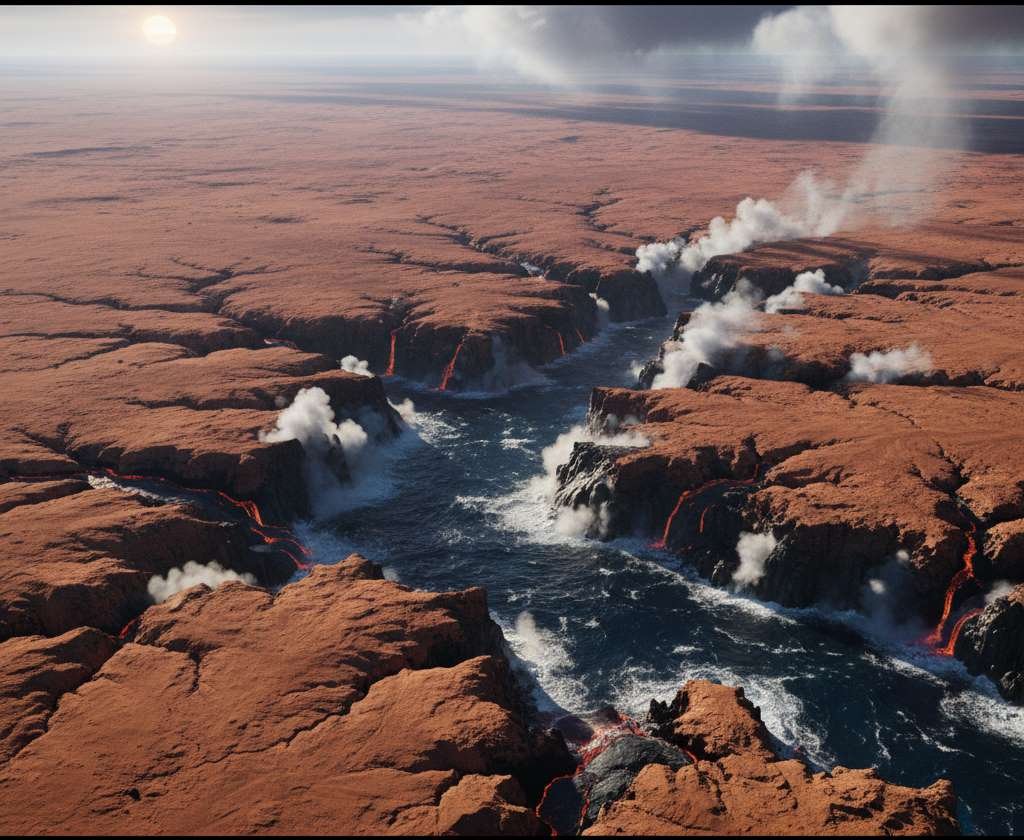
Breaking of Rodinia
The Proterozoic ended with a roller coaster of extremes. It started when I felt the ground groan as the giant land of Rodinia began to rip apart. This ripping created thousands of miles of new coastline, which changed the weather and pulled all the warming gases out of the air. This set the stage for a climate disaster as the Earth lost its greenhouse blanket once again.
The Cryogenian Period (720 – 635 million years ago): The Deepest Freeze
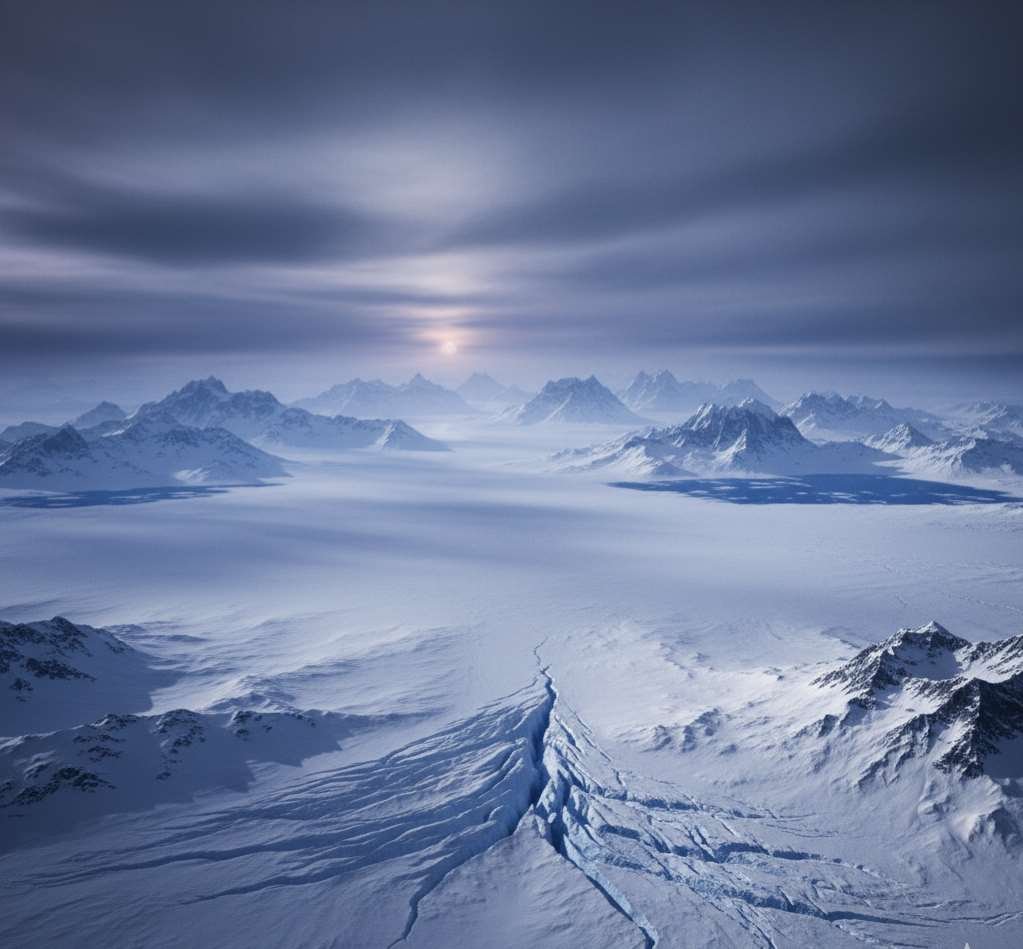
Second snowball earth during the cryogenian period
The Earth fell into the second and most severe Snowball Earth. I stood on the frozen equator and saw ice thousands of feet thick, but while the surface was a white tomb, the oxygen in the high atmosphere was quietly reacting with the sun’s rays to form the Ozone Layer. This was Earth’s “sunscreen,” making the land safe from the sun’s deadly radiation for the very first time in history. Without this invisible shield, life would have never been able to leave the ocean and walk on land.
The Ediacaran Period (635 – 541 million years ago): The Garden of Ghosts
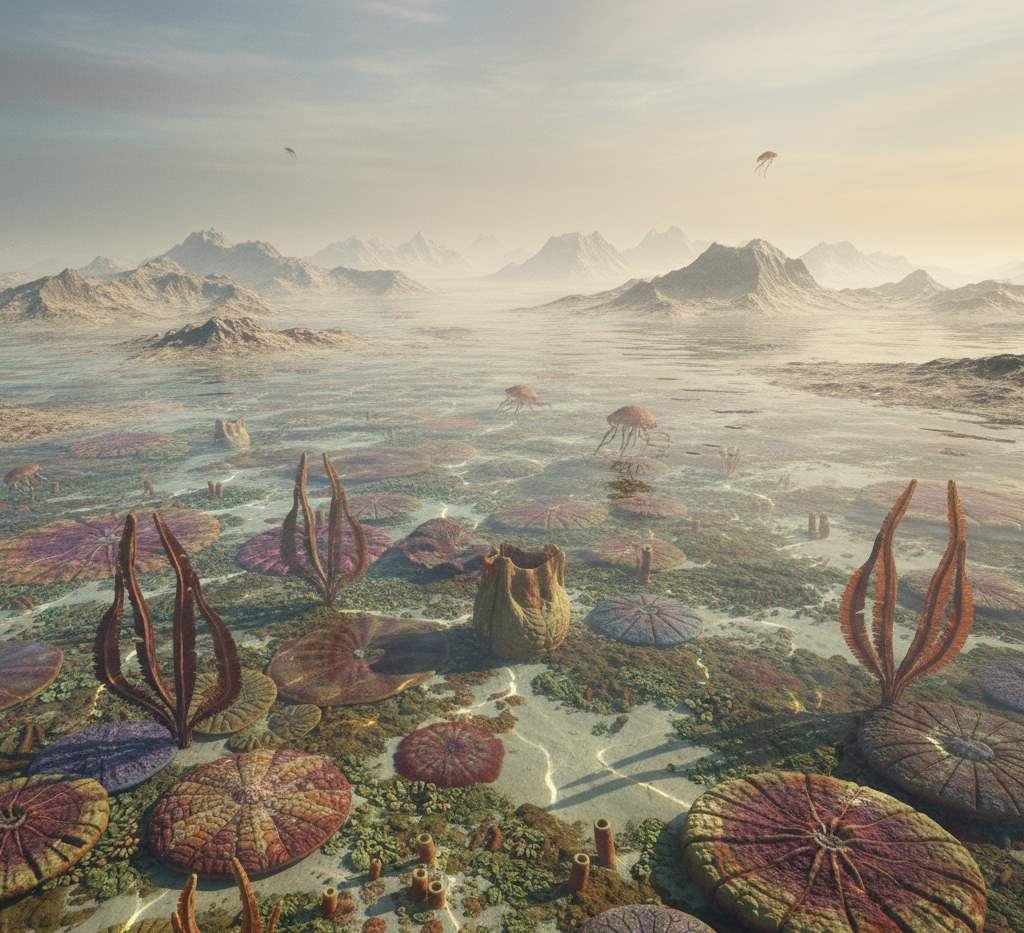
Strange alien life during the Ediacaran period
Finally, the ice shattered, and the oceans were flooded with oxygen and minerals from the melting glaciers. I saw a dream come to life in the shallow waters: the first multicellular animals, known as the Ediacaran Biota. They were strange, soft-bodied ghosts that looked like quilted mattresses or long ribbons. They had no teeth, no eyes, and no bones, and they likely just absorbed food from the water in total peace. It was a “Garden of Eden” where life was slow and gentle before the world became dangerous.
The Final Horizon
I stood on the shore at the very end of the eon, 541 million years ago, feeling the fresh blue air. The “Long Adolescence” of the Earth was over.
As I looked into the water, I saw something new: a tiny creature didn’t just drift; it swam with a purpose. Another one dug a hole in the sand. I saw the first tiny “teeth” and “shells” starting to form in the water’s chemistry.
A hunger was waking up, the peaceful garden was ending, and the era of the hunters was about to begin. The stage is set, and my next story will take us into the Phanerozoic Eon, where the first eyes will open and the world will finally start to look like home.
The Traveler’s Glossary: Words from the Deep Past
“I know I use some strange words to describe the things I’ve seen. Here is a quick guide to the ‘science’ behind my story, so you can speak the language of the stars too.”
⦁ Anaerobic: These were the “old world” microbes. They lived in a world without oxygen and actually found it deadly.
⦁ Banded Iron Formations (BIFs): Those striped red rocks I mentioned? That is the “rust” of the ancient oceans, layered over millions of years. It’s where almost all of your modern iron comes from.
⦁ Cyanobacteria: The tiny green heroes (or villains, depending on who you ask) that first learned how to eat sunlight and breathe out oxygen.
⦁ Endosymbiosis: The “Great Merger.” It’s the biological process where one cell lives inside another to help it survive.
⦁ Eukaryote: A complex cell with a protected center (a nucleus). This is the “blueprint” cell for every plant, animal, and human on Earth.
⦁ Glaciation: A fancy word for an Ice Age. When the planet gets so cold that massive sheets of ice move across the land.
⦁ Prokaryote: The simplest form of life. A tiny bubble of DNA with no internal parts. They ruled the Earth for billions of years before the “merger.”
⦁ Rodinia: The first truly massive supercontinent I saw. It was a giant puzzle made of all the Earth’s land pushed into one piece.
⦁ Stromatolites: The “mushroom-shaped” stone cities built by bacteria. They were the first major architects of the sea floor.
⦁ Aerobic: The “New World” life. These are organisms that need oxygen to survive. Before the sky turned blue, they barely existed; now, they run the planet.
⦁ Carbon Dioxide (CO2): The “Volcanic Heater.” This is the gas that volcanoes breathed out to melt the Snowball Earth. It acts like a trap for heat, warming the world back up.
⦁ Continental Shelves: The “Ocean Nurseries.” These are the shallow, sunlit areas near the edges of the land. They were the safe zones where life first experimented with getting bigger and more complex.
⦁ Ediacaran Biota: The “Garden of Ghosts.” The very first community of large, soft-bodied animals. They were peaceful, slow-moving “dream” creatures that lived just before the era of hunters.
⦁ Endosymbiosis: The “Great Merger.” The biological magic trick where one cell swallowed another to create a team, eventually leading to complex life like plants and humans.
⦁ Greenhouse Blanket: The “Heat Shield.” A layer of gases (like methane or CO2) in the atmosphere that keeps the sun’s warmth inside. When this blanket gets ripped, the Earth falls into a deep freeze.
⦁ Ozone Layer: The “Planetary Sunscreen.” An invisible shield high in the sky made of oxygen. It blocks deadly radiation from the sun, making it safe for life to eventually step onto the land.
⦁ Sexual Reproduction: The “Invention of Variety.” Instead of making exact copies (clones), life started mixing blueprints. This is why everyone looks different today instead of everyone being an identical twin.
⦁ Sudbury Basin & Vredefort Crater: The “Star Scars.” These are the massive holes left behind by giant asteroids. They are so deep they pulled gold and nickel from the Earth’s heart up to the surface.