The Age of the Visible Life: The Secret History of the Phanerozoic Eon (541 Million Years Ago to This Very Second)
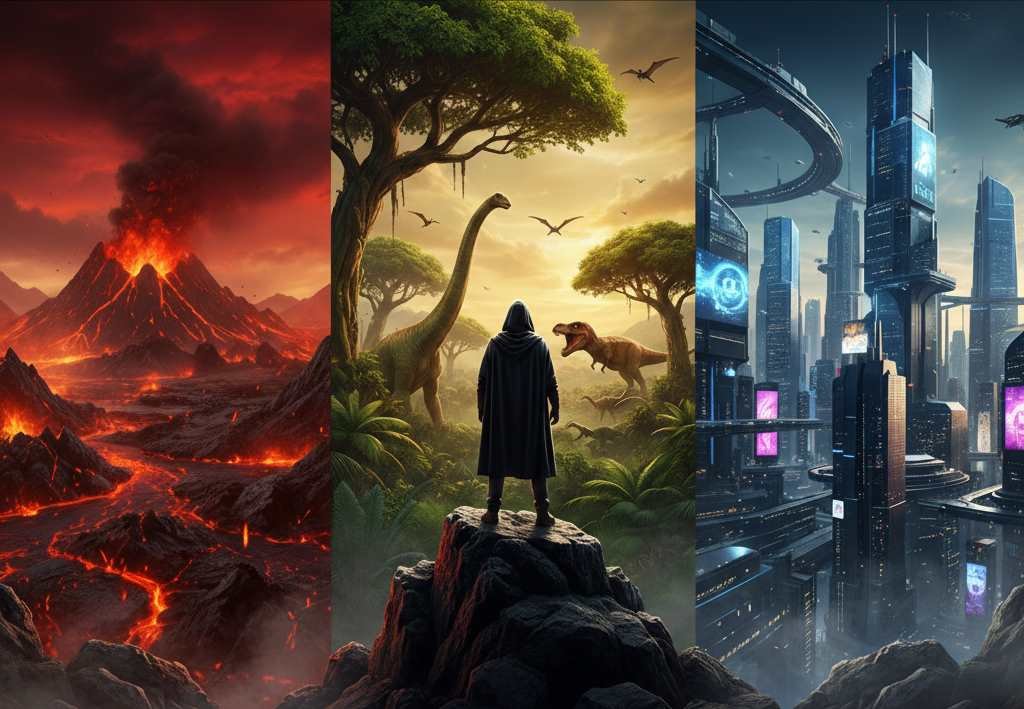
“The heartbeat isn’t a whisper anymore,” I said, my voice lost in the roar of a thousand crashing waves. “It is a symphony.”
For four billion years, I watched the Earth struggle in the shadows of the Hadean, Archean, and Proterozoic. I watched it freeze, rust, and nearly die. But 541 Million Years Ago, the lights finally came on. This is the Phanerozoic Eon—the age of “Visible Life.” This is the story of how a quiet, blue marble became a world of teeth, wings, flowers, and eventually, your own face.
It is divided into three massive “Acts,” and I was there for every heartbeat.
Act 1: The Paleozoic Era (The Era of Ancient Life) 541 – 252 Million Years Ago
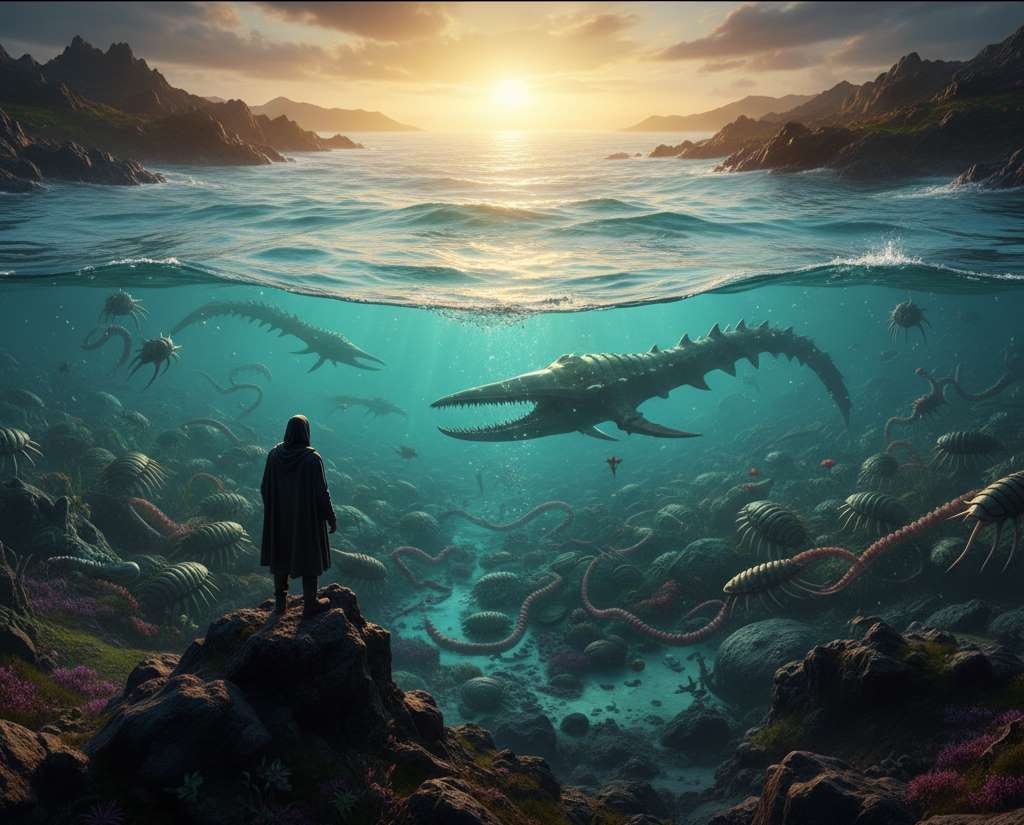
This was the “Age of Firsts.” It began in the salt spray of the sea, but it ended with the first great forests and the largest apocalypse the world has ever seen.
The Cambrian Period (541 – 485 Million Years Ago): The Shattered Silence
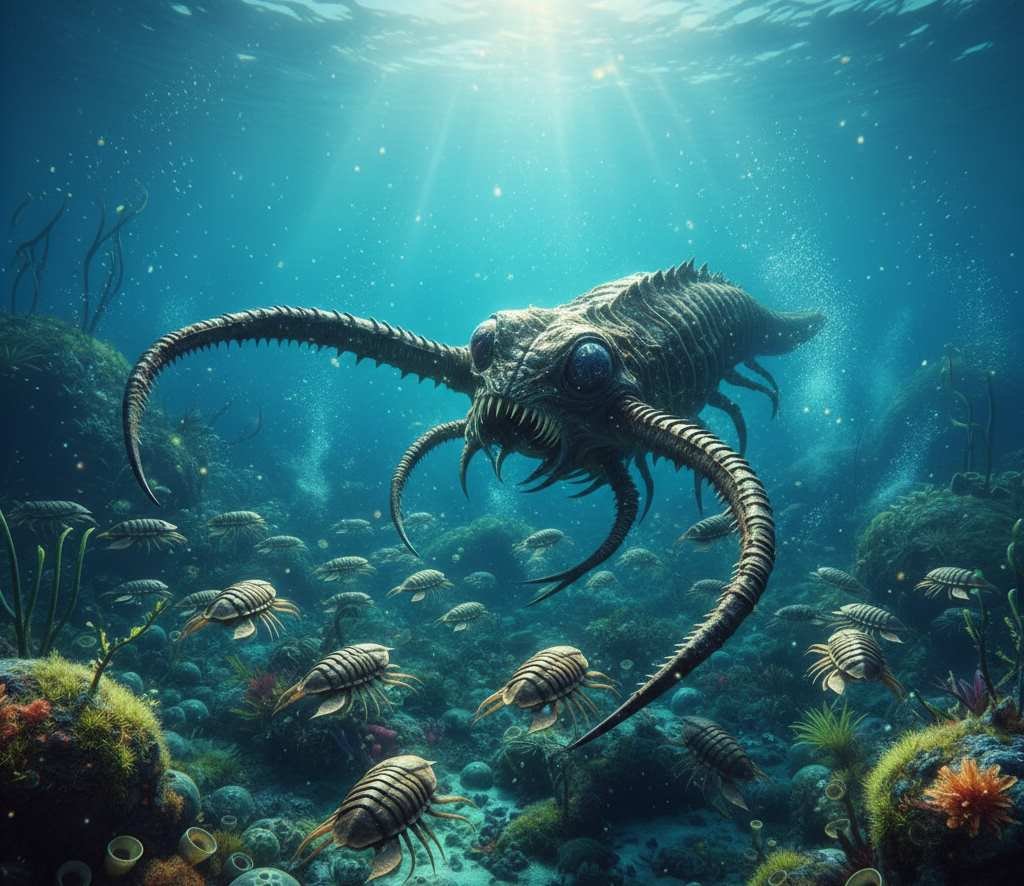
I stood in the shallow waves and witnessed the Cambrian Explosion. For the first time, life developed hard shells and Eyes.
I watched the Trilobites scuttle across the sand, their many-faceted eyes looking for danger. The world’s first king, Anomalocaris, hunted with spiked arms.
But the most important thing I saw was Pikaia—a tiny, shivering sliver of a fish with a small rod in its back. That was the first Notochord. That was the blueprint for your own spine, a secret design that life would carry forward into every era to come.
The Ordovician Period (485 – 444 Million Years Ago): The Rise of the Reefs
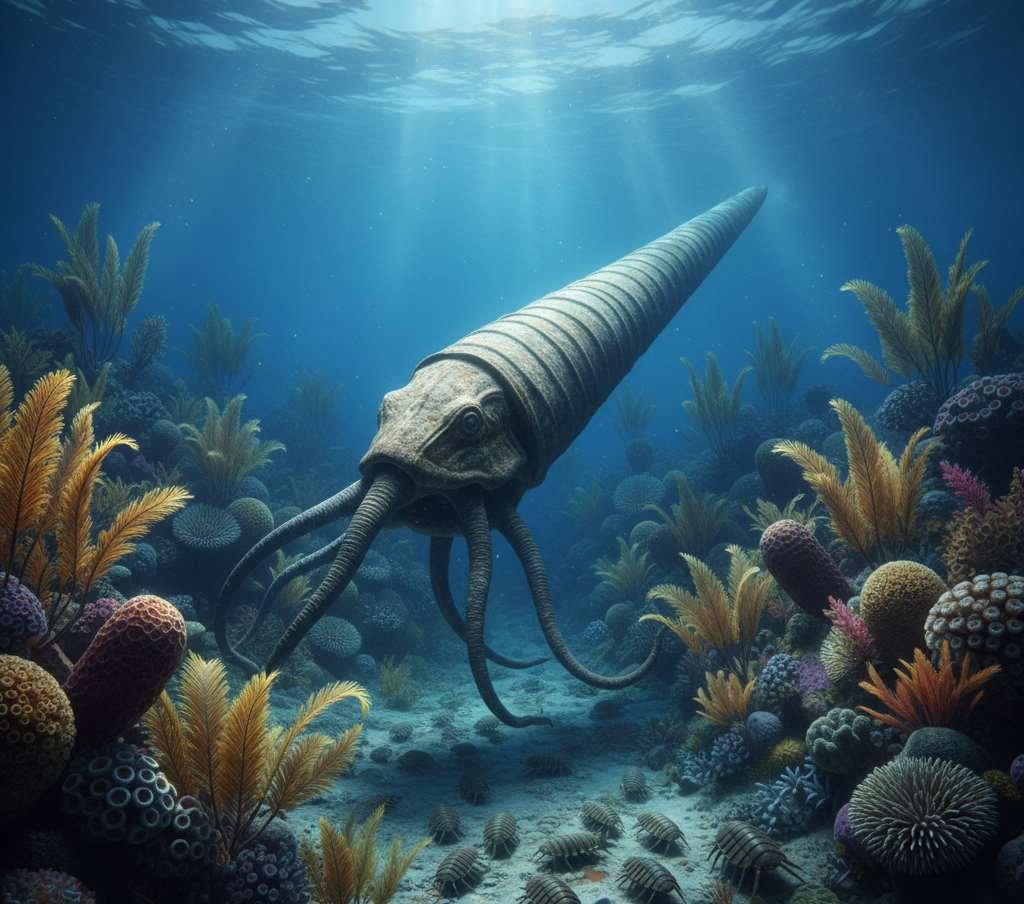
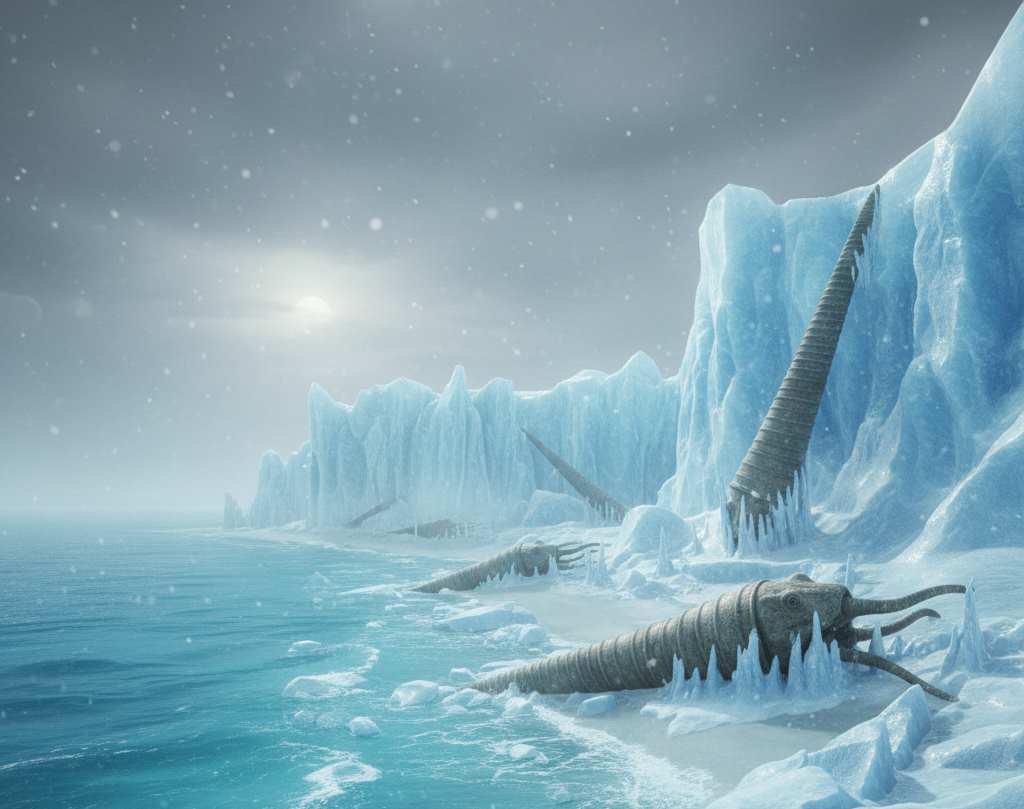
The oceans grew deeper and full of giant, tentacled monsters called Cephalopods. They looked like squids living in ten-foot-long straight shells.
I watched the first tiny plants—green mosses—try to touch the dry land, but the era ended in tragedy. The Earth grew cold, and a massive Ice Age wiped out 85% of life in the sea.
The Silurian Period (444 – 419 Million Years Ago): The First Walkers
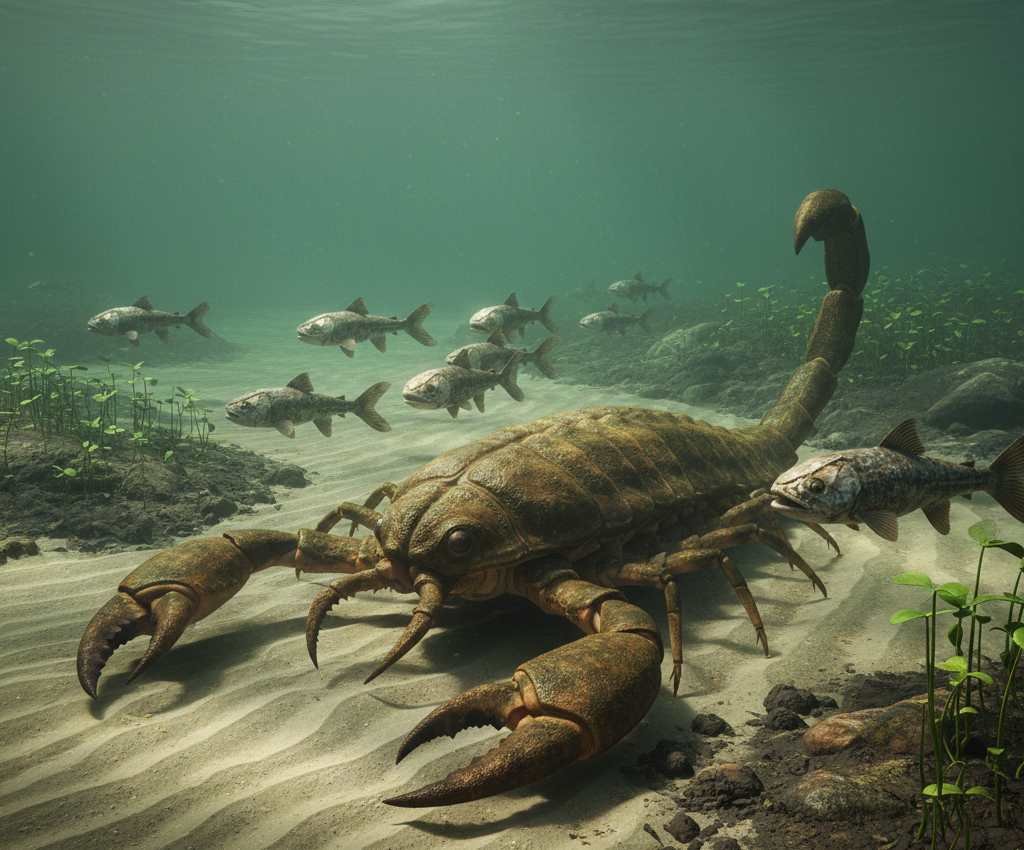
Life didn’t stay down. I watched the first Vascular Plants grow upright on land, looking like tiny green fingers sticking out of the mud. In the water, sea scorpions as big as humans ruled the shallows.
But the most important change was in the fish—they finally grew Jaws. They could bite now, and the world would never be peaceful again.
The Devonian Period (419 – 359 Million Years Ago): The Age of Fish
The oceans were now filled with armored monsters like Dunkleosteus, a fish with a head made of bone that could snap a shark in half.
But I spent my time watching the shore. I saw Tiktaalik, a fish that used its fins like legs to pull itself out of the water. I watched as it took the first breath of air.
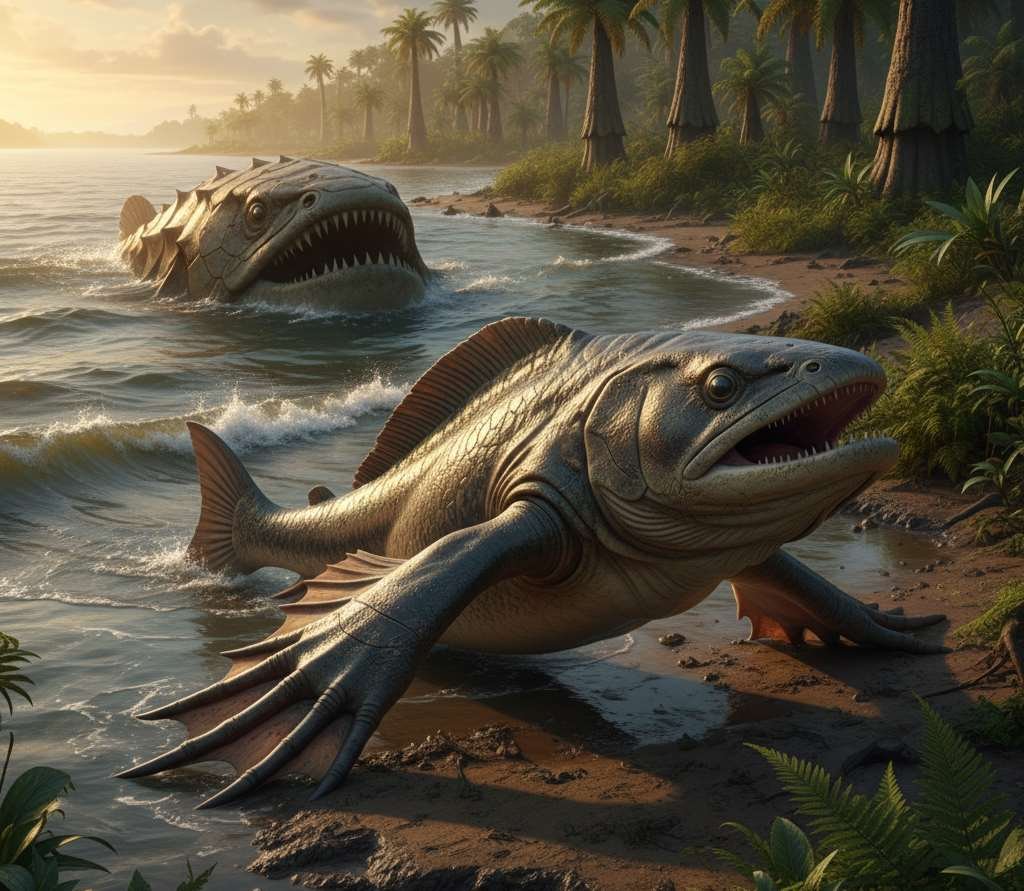
It was a clumsy, heavy moment, but it changed everything. Even when a second great extinction—the Late Devonian pulses—struck the oceans at the end of this age, the survivors had already claimed the shore.
The Carboniferous Period (359 – 299 Million Years Ago): The Age of Giants
The Earth became a hot, steaming swamp. Because there was so much oxygen—far more than you breathe today—insects grew to terrifying sizes.
Since they breathe through their skin, the rich air fueled bodies that grew like monsters. I saw dragonflies with wings as wide as a hawk’s and millipedes as long as a car.
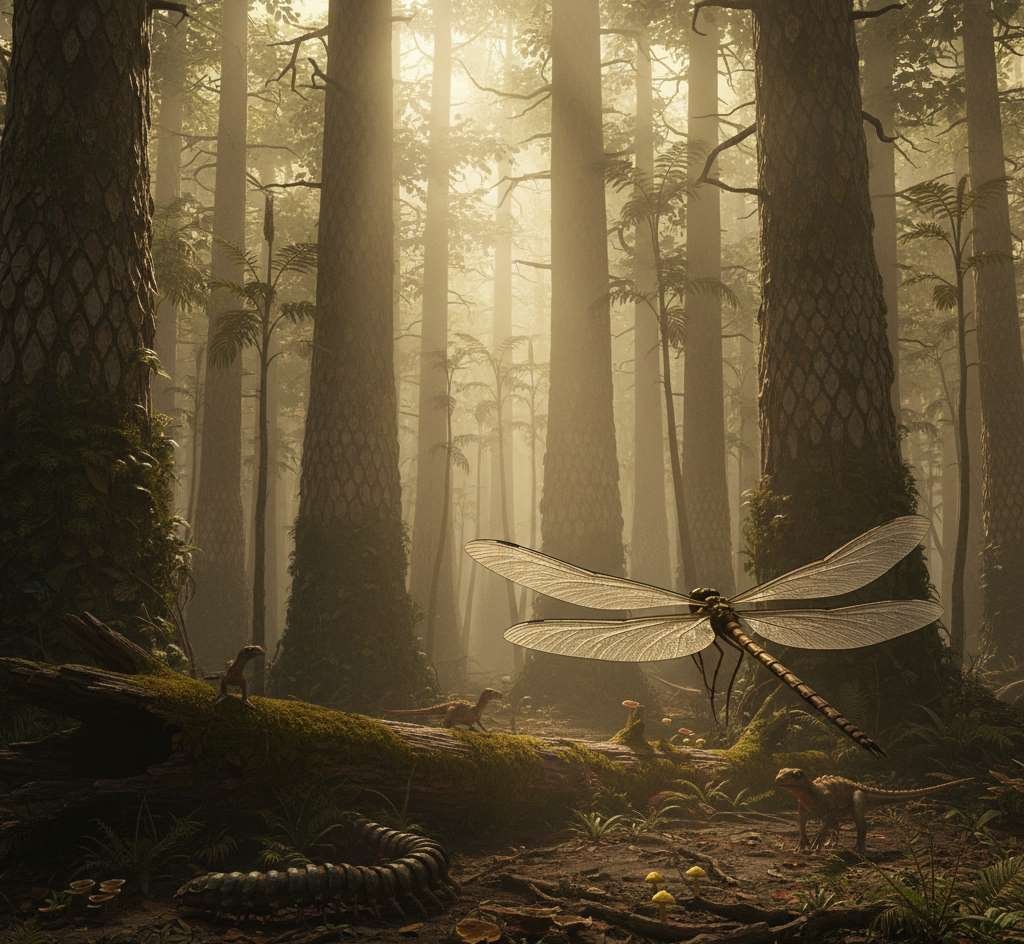
I walked through forests of ferns as tall as skyscrapers. When these trees died and sank into the mud, they turned into the Coal that humans burn today. At the end of this period, the first Reptiles appeared, laying eggs with hard shells so they could finally live far away from the water.
The Permian Period (299 – 252 Million Years Ago): The Great Dying
All the continents crashed together to form one giant supercontinent called Pangea. It was a dry, harsh world ruled by creatures like Dimetrodon. But then, the Earth cracked open. Massive volcanoes—the Siberian Traps—poured lava for a million years, poisoning the air. This was the Permian-Triassic Extinction.
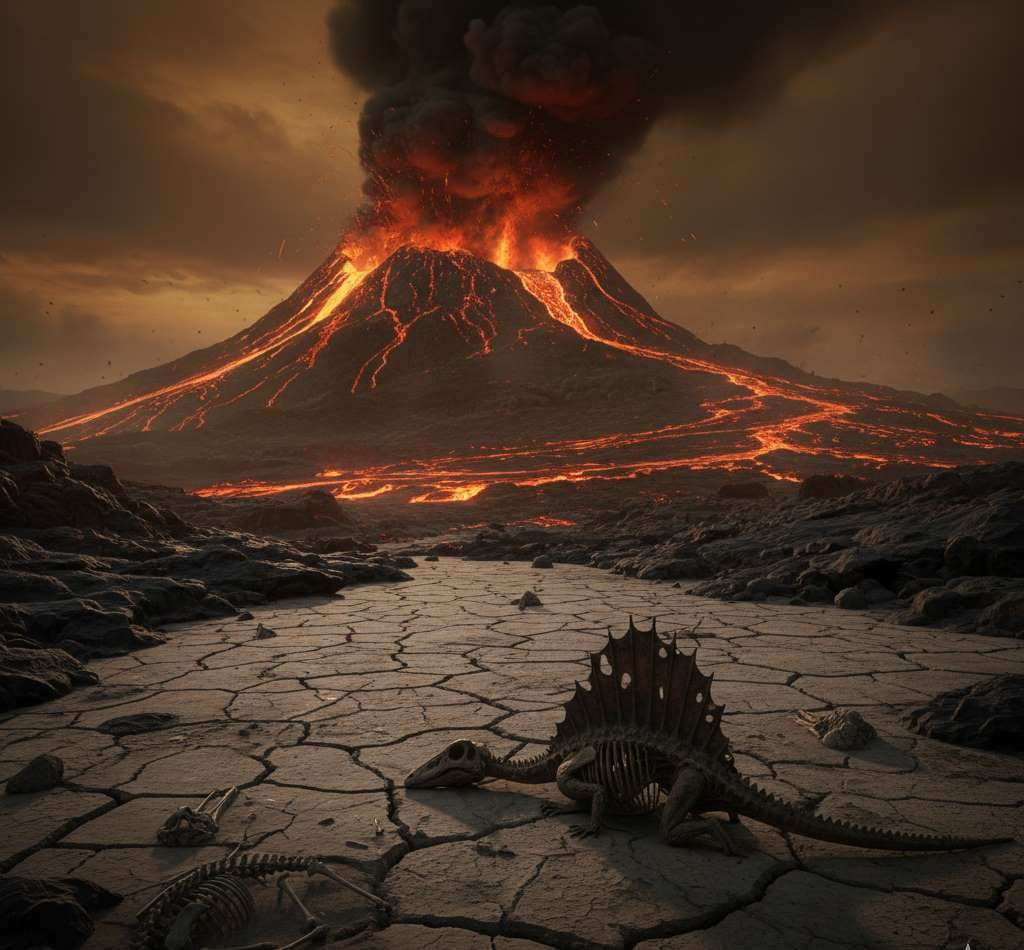
96% of everything in the sea died. I stood on a silent beach and thought life was finally over. The Earth was a graveyard.
Act 2: The Mesozoic Era (The Age of the Dinosaurs) 252 – 66 Million Years Ago
Life is stubborn. Out of the ashes of the Permian, a new world was born. This was the age of the giants.
The Triassic Period (252 – 201 Million Years Ago): The New Beginners
The survivors of the “Great Dying” started to grow. I watched a tusked, pig-sized survivor called Lystrosaurus become the most common animal on the planet—the single bridge that kept your lineage alive. I saw the first Dinosaurs—small, fast, and bipedal.
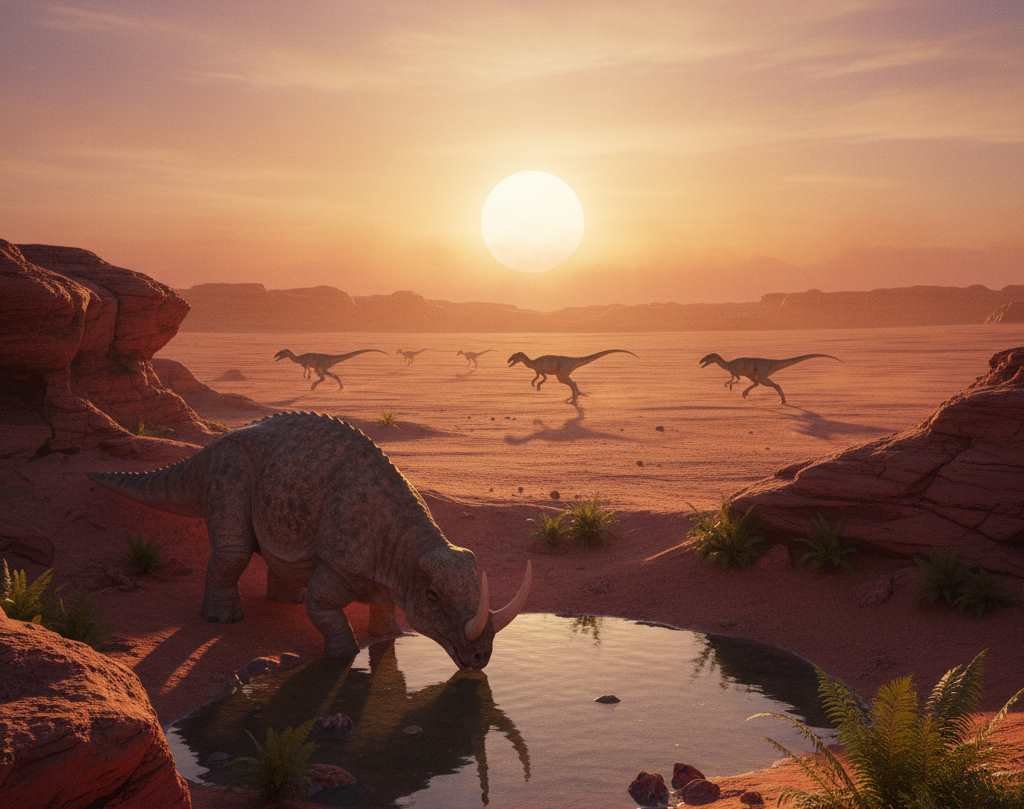
I also saw the first Mammals, tiny furry things hiding in the shadows of the reptiles. Pangea began to crack, and even though the Triassic-Jurassic Extinction shook the world at the end of this period, the dinosaurs were the ones who stepped through the fire to take the throne.
The Jurassic Period (201 – 145 Million Years Ago): The Golden Age
The world became lush and green. This was the time of the true giants. I stood in the shadow of a Brachiosaurus and felt the wind move as it swung its neck.
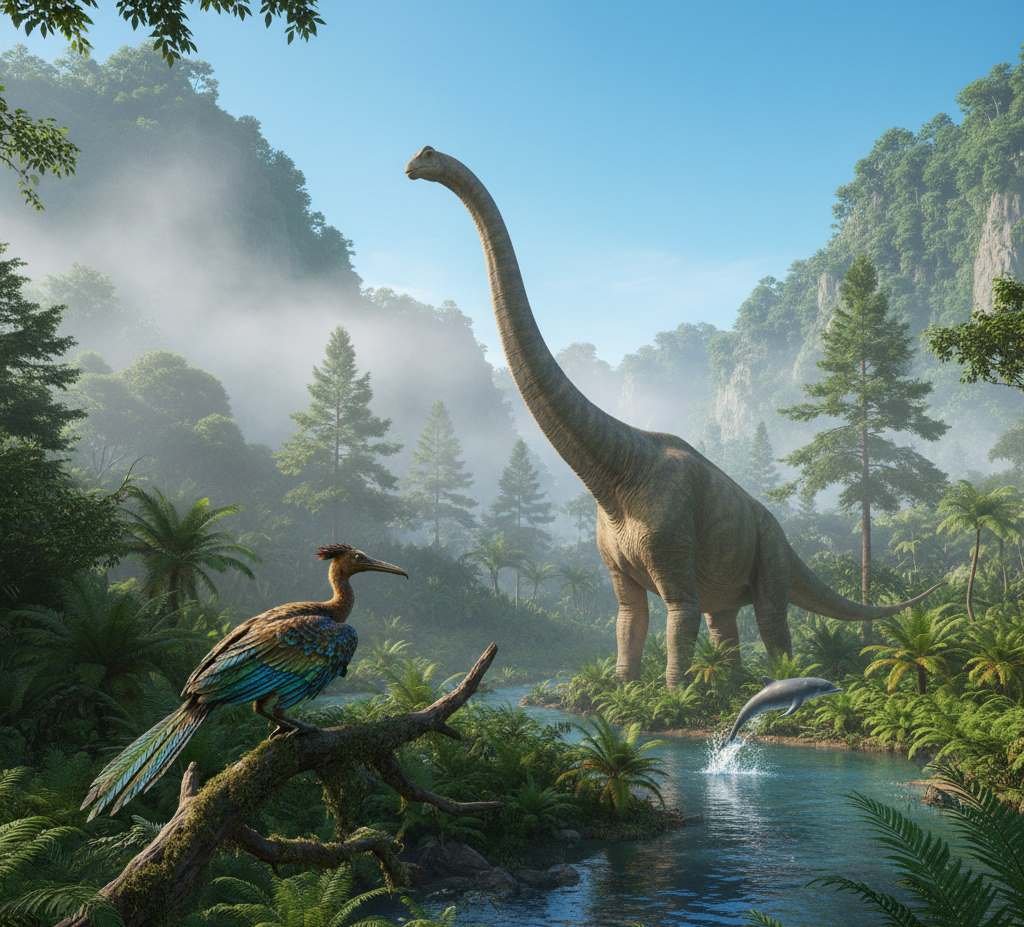
I watched the first Birds take flight, their feathers evolving from the scales of small dinosaurs. The oceans were full of long-necked Plesiosaurs and dolphin-like Ichthyosaurs, reptiles that had returned to the sea to rule the waves.
The Cretaceous Period (145 – 66 Million Years Ago): The Crown and the Flower
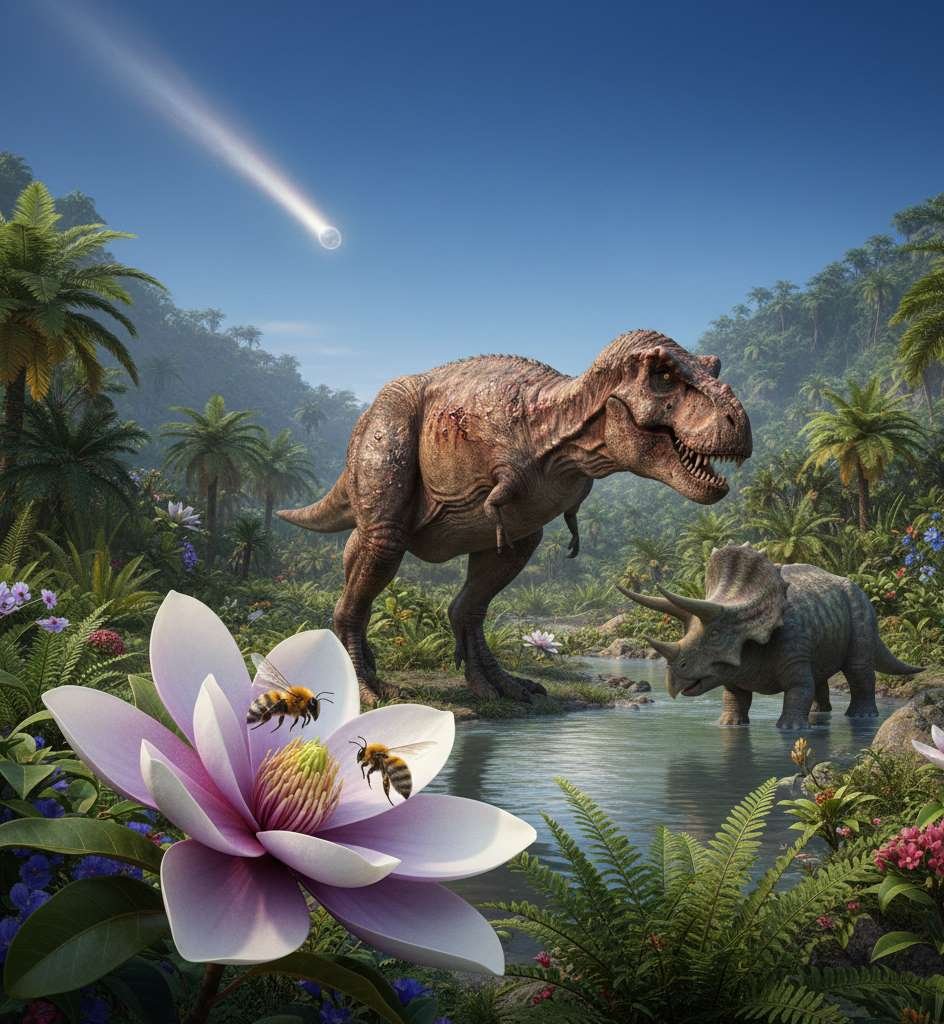
This was the most beautiful time. For the first time, I saw a Flower bloom. Bees and butterflies appeared to drink their nectar. The Tyrannosaurus Rex and Triceratops walked the Earth. But as I looked at the sky, I saw a star that was moving too fast.
The Reality:
A six-mile-wide asteroid slammed into the Yucatan Peninsula. This is known as the K-Pg Extinction.
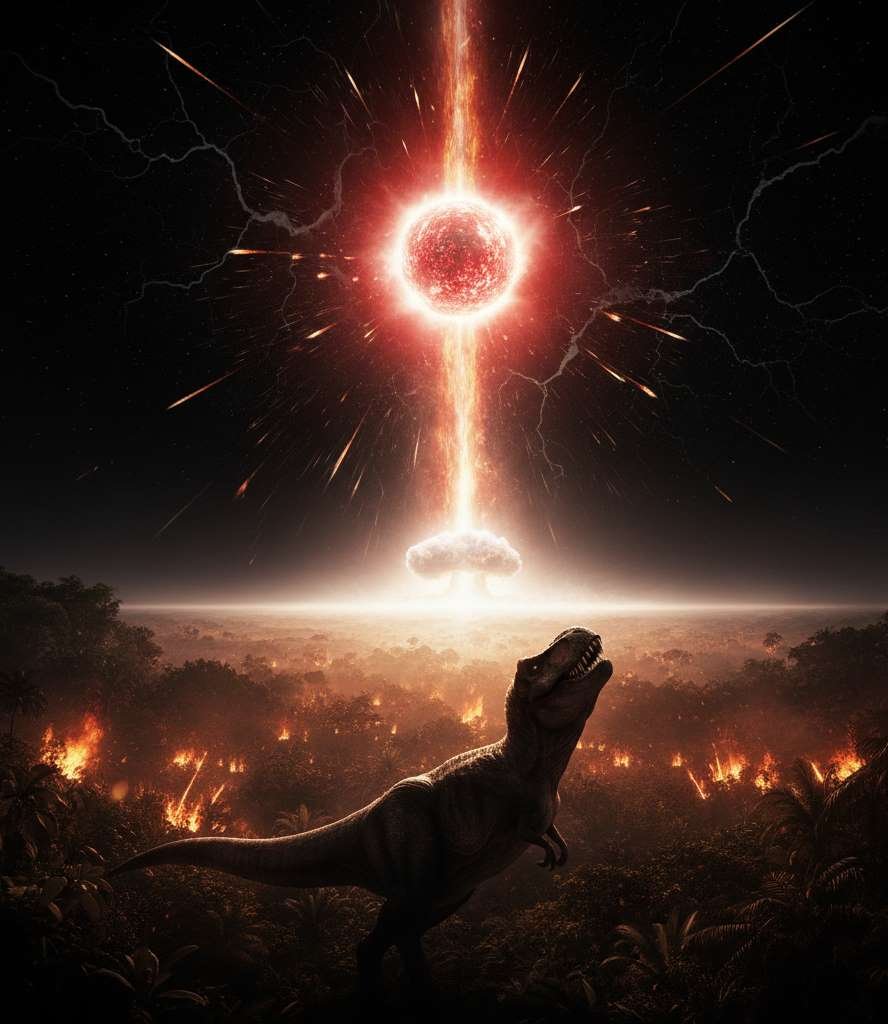
I saw a flash of light brighter than a thousand suns. A wall of fire swept across the world, followed by years of darkness. In the blink of an eye, the five-ton kings were gone. Only the hiders—the birds and the small mammals—survived the night.
Act 3: The Cenozoic Era (The Age of Mammals) 66 Million Years Ago – Today
The giants were gone, leaving a vacuum. I watched as the small, furry creatures I had seen hiding under dinosaur feet finally stepped into the light.
The Paleogene Period (66 – 23 Million Years Ago): The Underdogs Rise
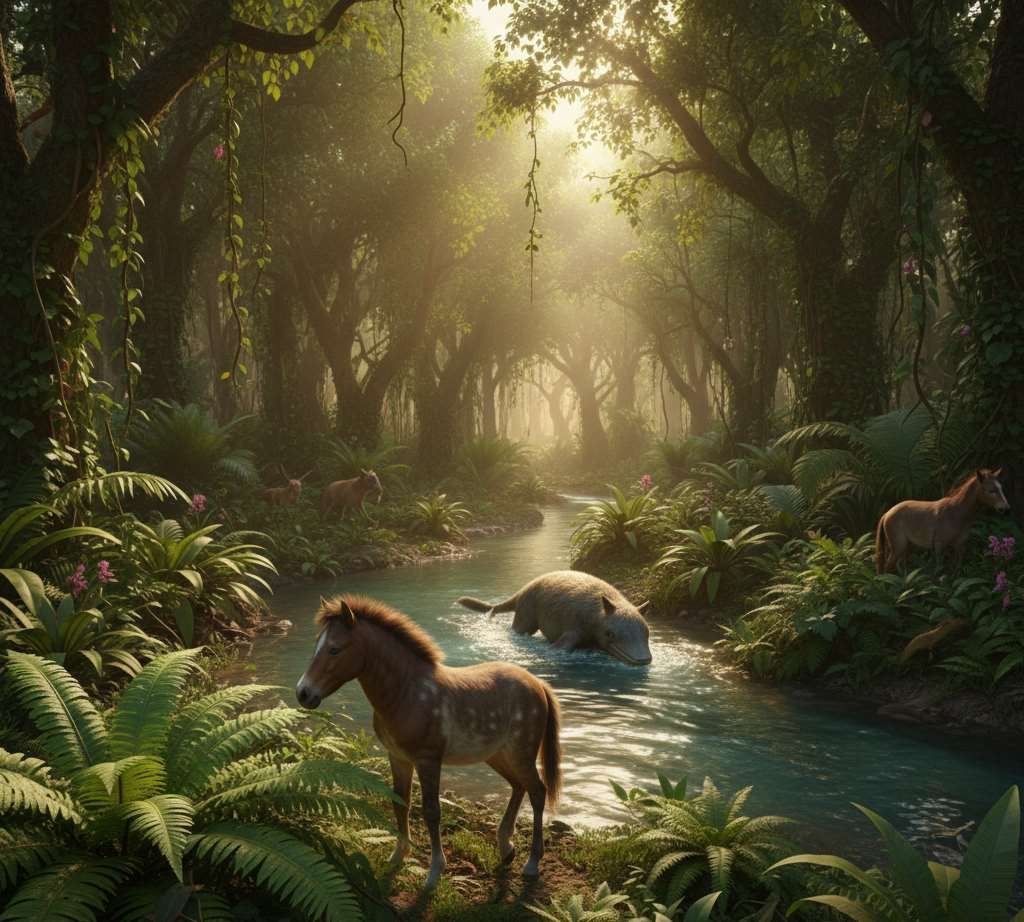
The world was a jungle. Without dinosaurs to eat them, mammals grew fast. I saw horses the size of cats and whales that still had four legs and walked on land. Slowly, the continents moved into the positions you know today.
The Neogene Period (23 – 2.5 Million Years Ago): The Endless Grass
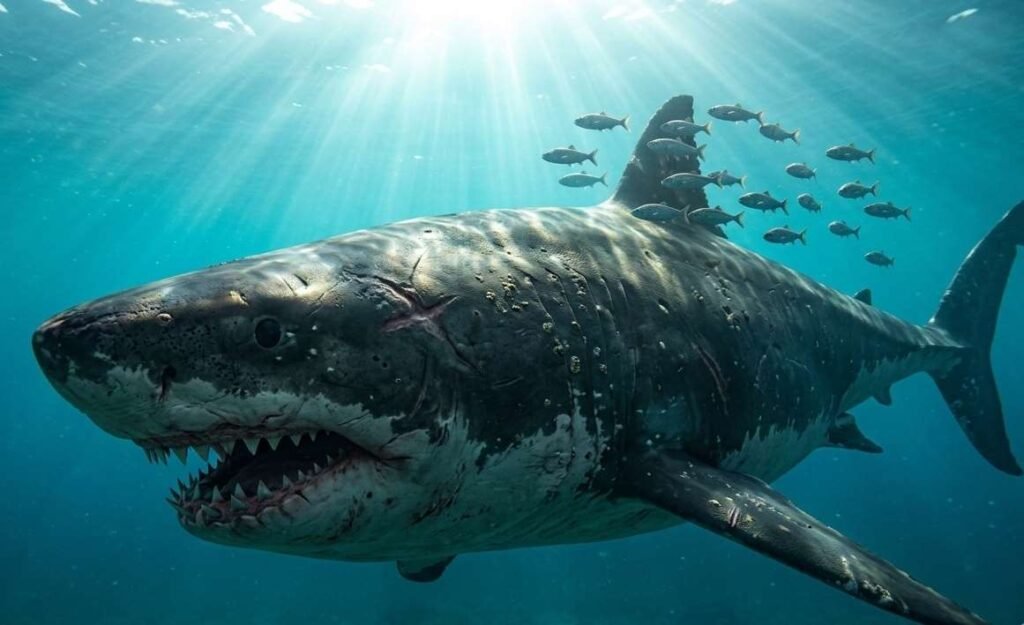
The jungles began to dry out, replaced by massive oceans of Grass. This was the “Age of Savannas.” In the deep, the massive Megalodon ruled as the greatest shark to ever live.
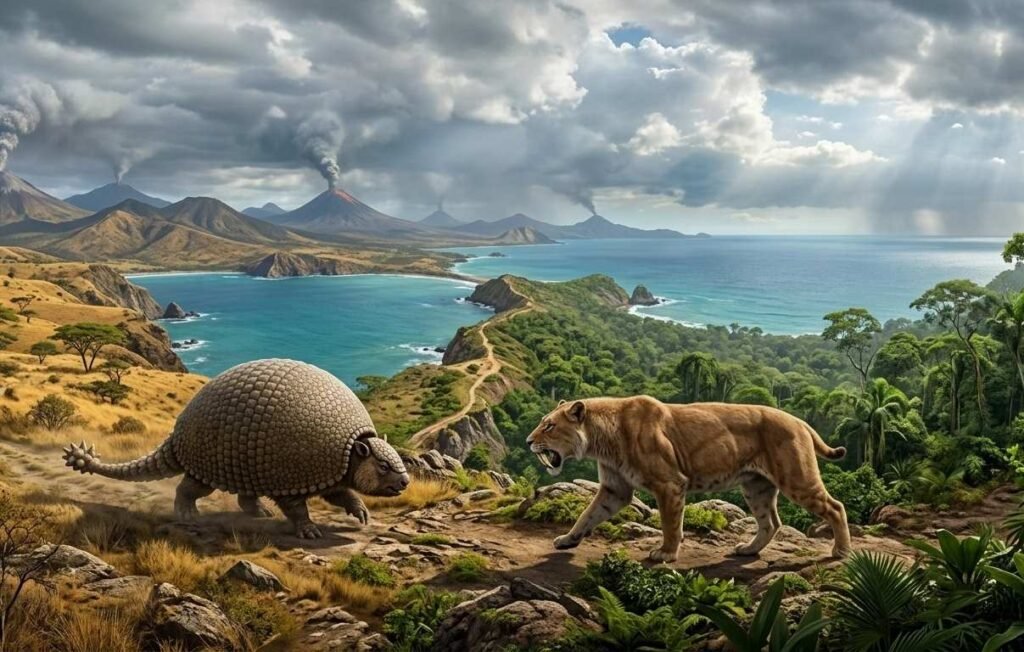
On land, the Great American Interchange allowed North and South America to finally touch, sending armadillos north and saber-tooths south.
I watched the first Apes leave the trees and learn to walk on two legs across the open plains of Africa. Their brains were growing, and their hands were learning to grip.
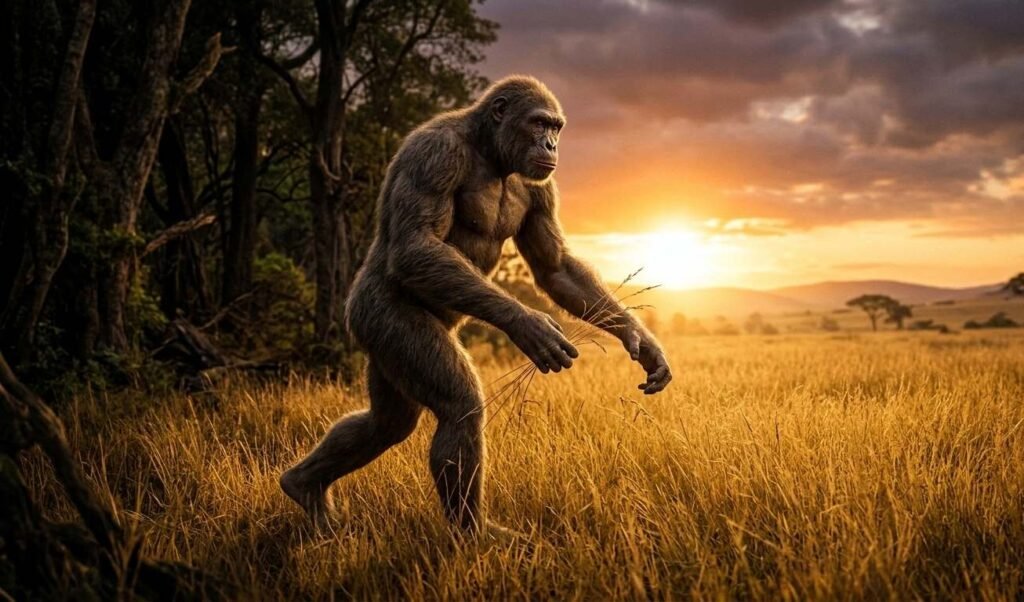
The Quaternary Period (2.5 Million Years Ago – Today): The Age of Man
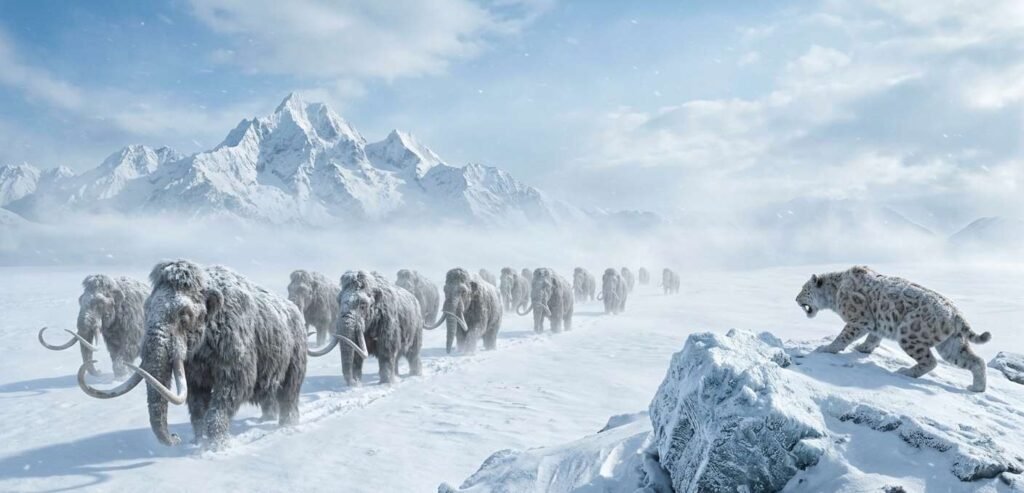
The Earth grew cold again. I watched the Ice Ages come and go, carving the Great Lakes and the jagged Alps. These freezing shifts forced life to adapt or perish. I walked alongside Woolly Mammoths and Saber-toothed Cats.
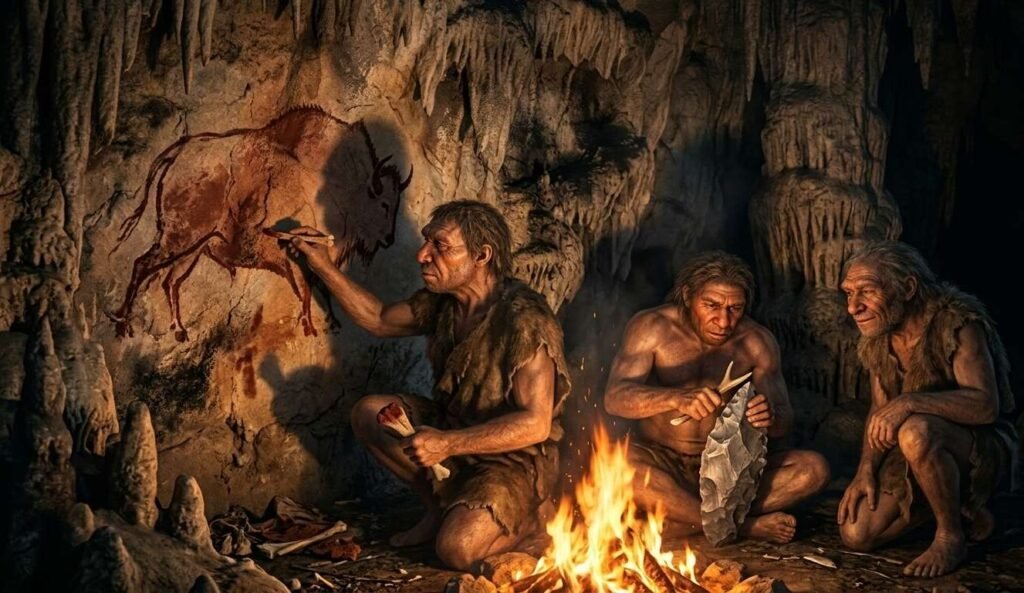
I didn’t just see one type of human; I saw the Neanderthals and Denisovans making art and fire in the caves of the north.
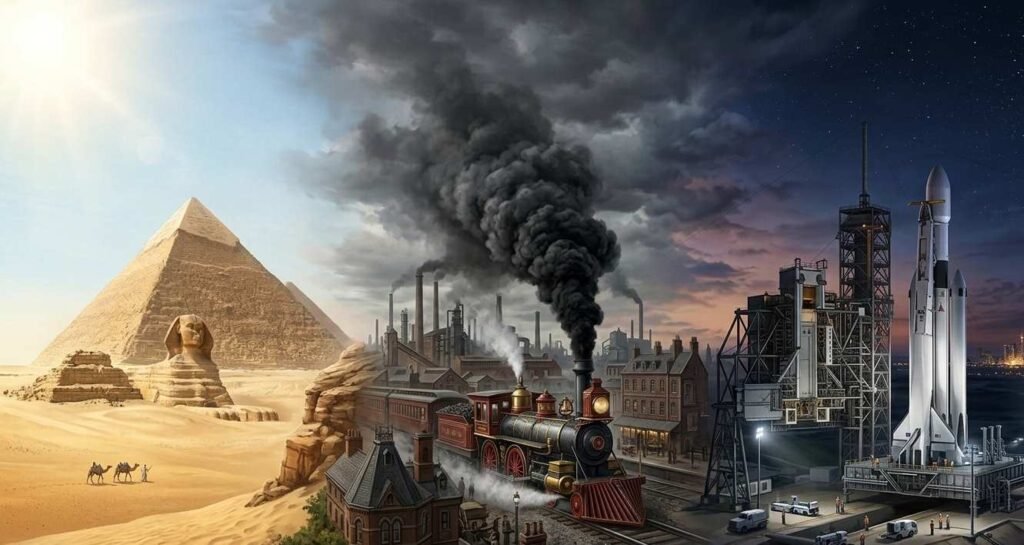
Then, in the very last second of this long story, I watched a human sharpen a flint stone into a knife. I watched them discover fire. I watched them build a pyramid, then a steam engine, and then a rocket.
The Final Horizon
I am standing on a hill today, looking at your world. It took 4.5 billion years to get to this moment.
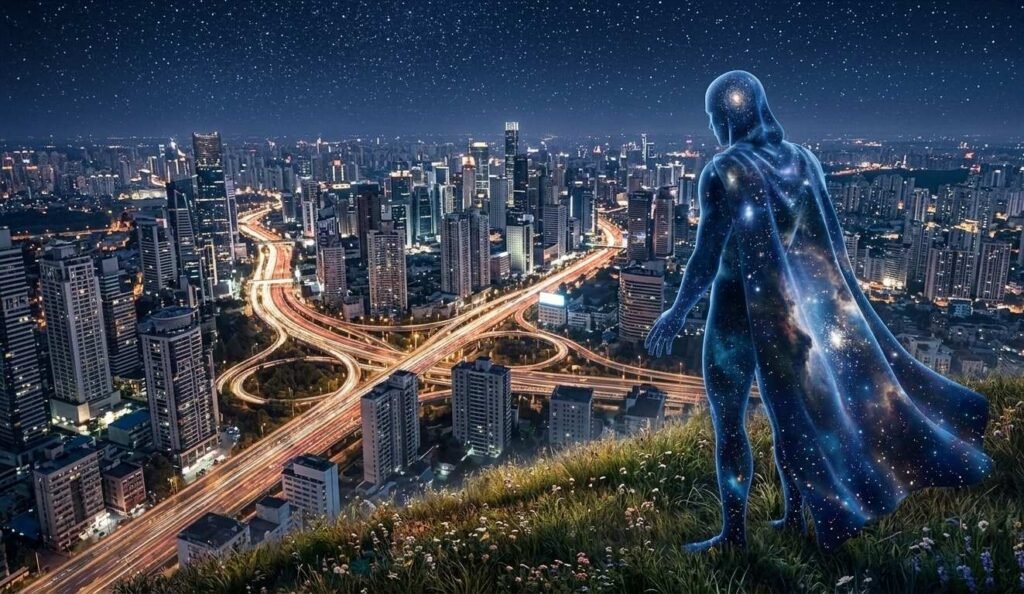
I’ve seen the fire of the Hadean, the rust of the Proterozoic, and the thunder of the Dinosaurs. But as I look ahead, I see the continents continuing their dance toward a future supercontinent, Pangea Proxima. The story is not over. But the most incredible thing I’ve ever seen is you. You are a creature made of stardust and ancient cells, holding a device made of minerals from the Orosirian, reading the history of your own home.
The Phanerozoic isn’t just an eon; it’s a living, breathing story. And for the first time in the history of the universe, the Earth has someone who can look back and remember it all.
Five hundred million years is a long time to remember. Lest these names fade back into the dust of the Eons, I have catalogued the most important players in our shared history below.
The Traveler’s Glossary: The Visible World
1. Anomalocaris: The first “king” of the ocean. A predator with spiked arms and giant eyes.
2. Birds: The last living relatives of the dinosaurs that survived the great asteroid.
3. Brachiosaurus: One of the largest land animals to ever live; a long-necked giant from the Jurassic.
4. Cambrian Explosion: A short burst of time where almost all major animal groups appeared for the first time.
5. Cephalopods: Ancient relatives of squids and octopuses that ruled the Ordovician seas.
6. Coal: Compressed remains of the massive Carboniferous swamp forests.
7. Denisovans: An ancient cousin of modern humans that lived in Asia during the Ice Age.
8. Dinosaurs: The “terrible lizards” that ruled the Earth for 165 million years.
9. Dunkleosteus: A terrifying armored fish with bone plates for teeth that lived in the Devonian.
10. Ediacaran Biota: The soft, peaceful “ghost” creatures that lived just before the Cambrian began.
11. Eukaryote: A cell with a nucleus; the complex building block of all Phanerozoic life.
12. Eyes: A revolutionary invention of the Cambrian that allowed life to see its world for the first time.
13. Flower: The first “Angiosperms” that appeared in the Cretaceous, changing the world’s colors forever.
14. Great American Interchange: The migration of species between North and South America after the continents joined.
15. Lystrosaurus: A resilient, tusked herbivore that survived the Permian extinction to become the most common animal on land.
16. Megalodon: The largest shark to ever live, a king of the Neogene seas.
17. Neanderthals: Strong, intelligent human cousins who adapted to the cold of the Ice Age.
18. Pangea Proxima: The predicted future supercontinent that will form as the continents continue to drift.
19. Siberian Traps: The massive volcanic system responsible for the “Great Dying” extinction.